The Ride to See 2015

Today’s ride: The Ride to See is a charity event that benefits vision research and programs for the blind. The rides start from Galena Maryland on the Eastern Shore, and goes through towns like Rock Hall and Chestertown.  The ride is held on the second saturday in August. This can be a hot ride, so hydration is important. The Ride to See rolls through farmland, past the Chesapeake bay, by creeks and rivers, and it also coincides with a festival in Rock Hall.  Rides range from 15 miles to a full century. The shorter rides can be good training rides for longer rides later in the year.

The Experience: This year it was a smaller crew riding the Ride to See, just Ron, Rita and Myself.  I set out feeling good, so I led most of the way to the first rest stop. The day was still cool, and while this wasn’t the best way to go, it felt like a great day to ride. The second leg to Rock Hall was relatively fast. When we reached the rest stop, the “Pirates and Wenches” festival was lively, and we rolled past the beach and into the rest stop with pirates all around us. I was starting to feel the heat, and made the most of the stop, but by the time I got to Chestertown, I was beginning to feel the heat, and all the pulling I did early in the ride was beginning to tell. I began to suffer in the hills between Chestertown and the final rest stop.  A quick stop for a gel helped, and I managed to hold onto the team as we reached the final stop. After a good rest and more water, I found a way to finish the ride strong. We managed to find more friends to celebrate with at the crab deck afterward – and the celebration made the difficulty of the ride worthwhile.

Selections from my mental iPod during the ride: “Houses of the Holy” by Led Zeppelin, and “Lost in the Supermarket” by the Clash. 

Stats: 100 Miles ridden, and despite pushing too hard in the first half of the ride, I managed to finish the ride without incident.    


IMG_0274

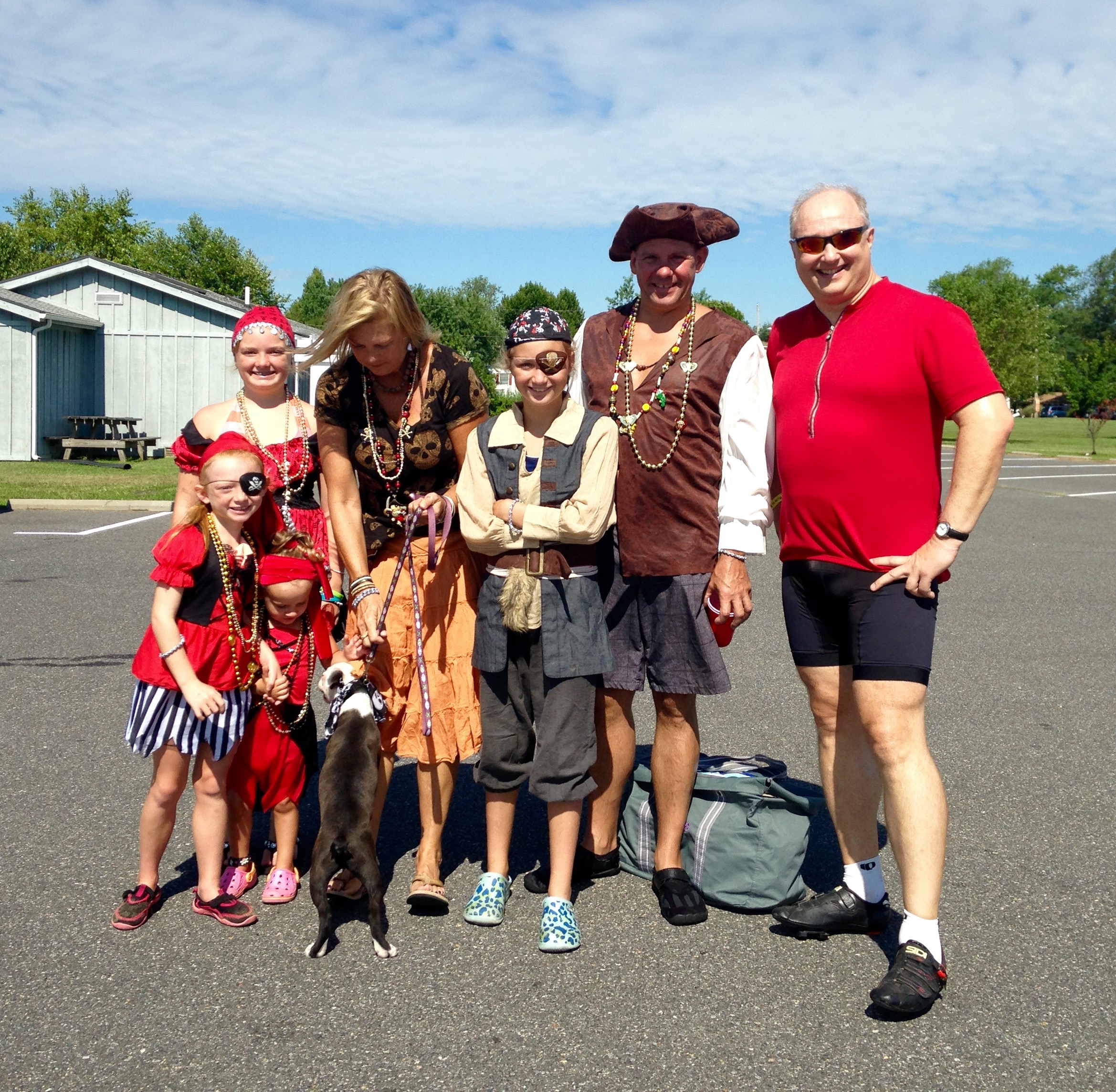
Hanging out with Pirates in Rock Hall


IMG_0277

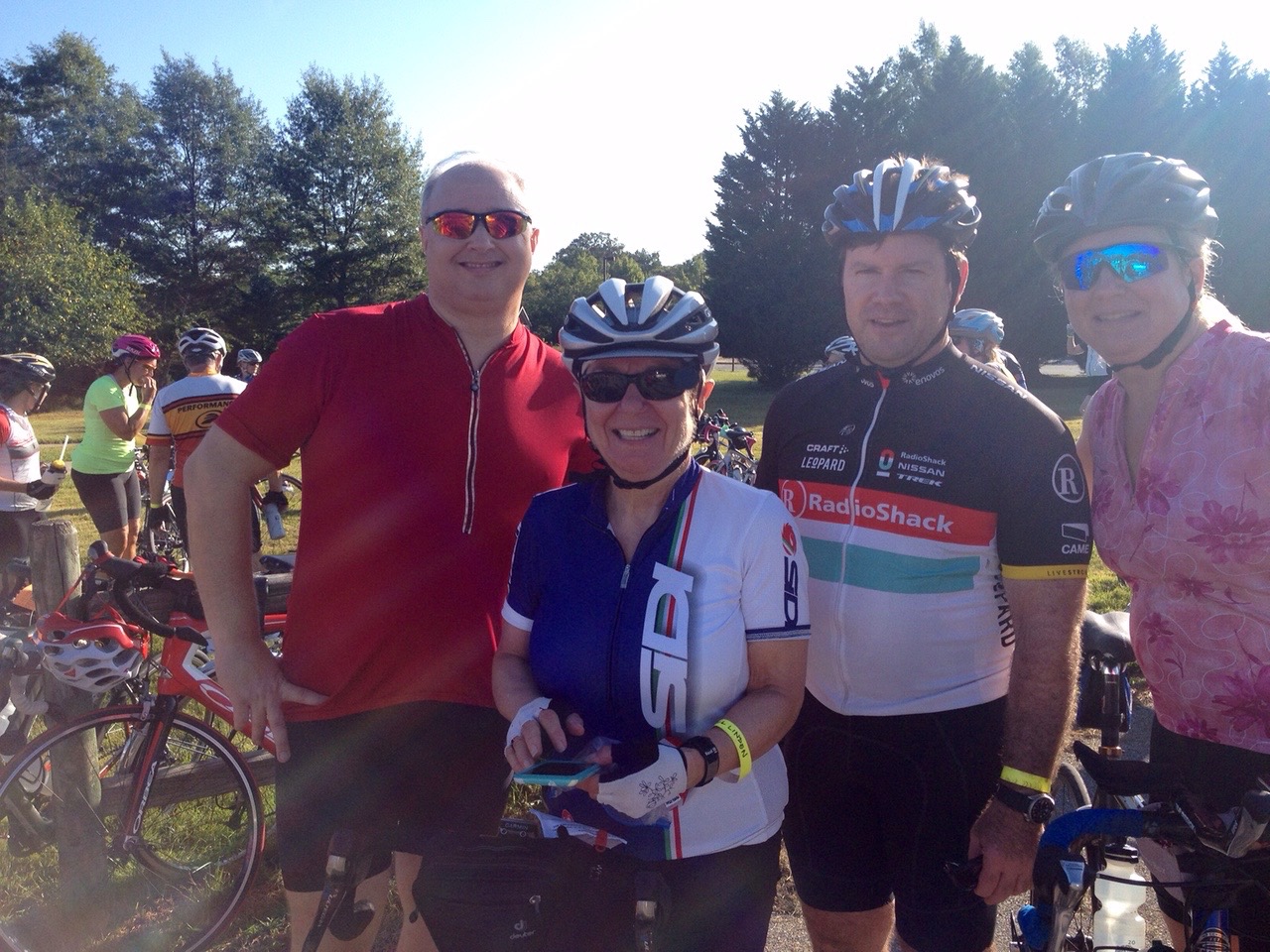
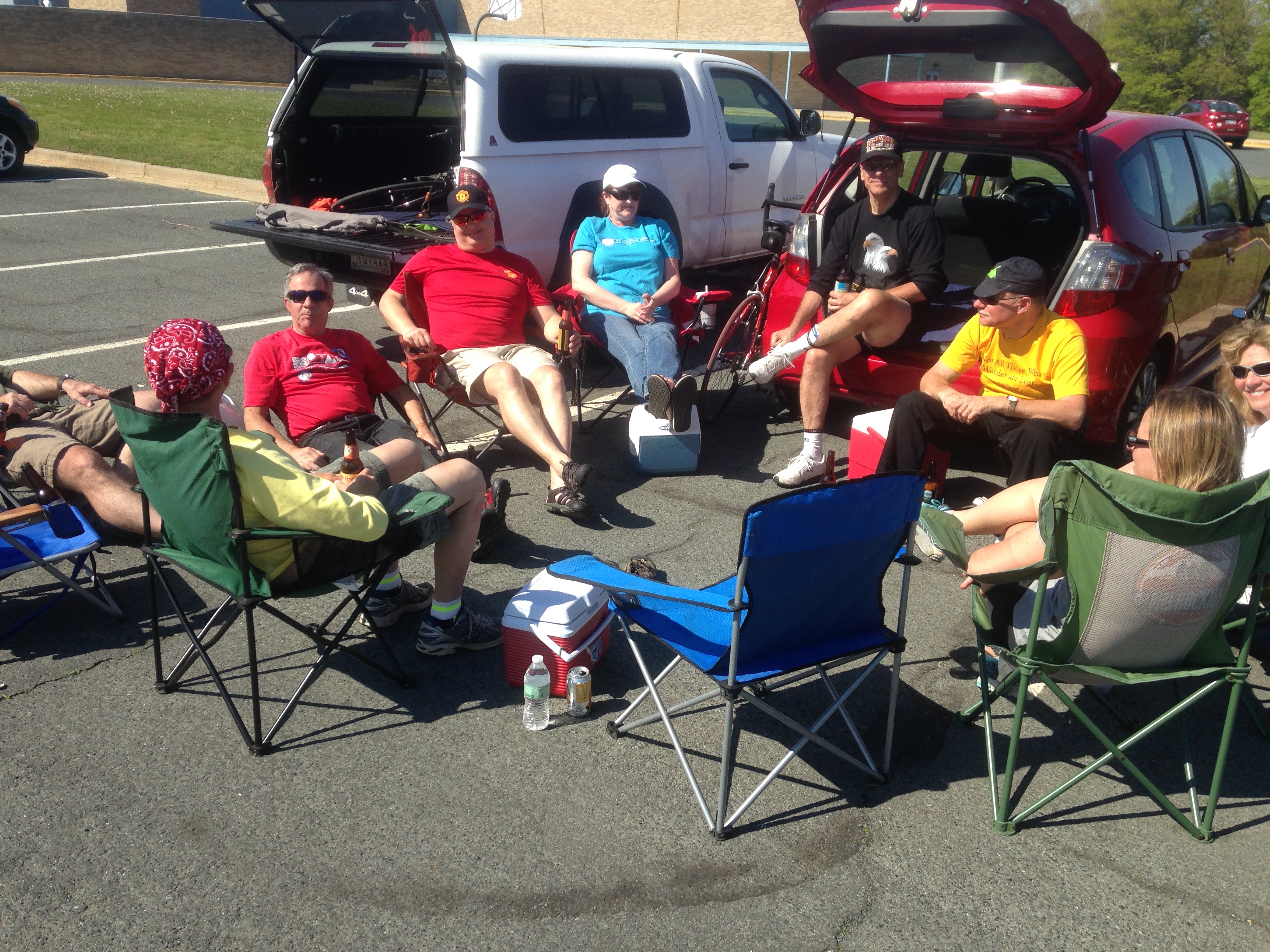
Tom Roman, Ron, Theresa, Rita and I celebrate a memorable day.

Delaware Double Cross 2015

Today’s ride: The Delaware Double Cross is a Metric (62 miles) put on by the White Clay Bicycle Club, and it crosses the narrow portions of the state of Delaware twice. Since it’s held in the first weekend in July, it has the tendency to be HOT. Hydration is key for any hot ride, but the Double Cross is well supported over the distance. The ride is mostly flat, but there is often wind to contend with.

The Experience: My ride started with an email from my friend Ron – my usual partner in crime, who keeps careful track of rides within driving distance of Washington DC, asking if I was up for riding the Double-cross again. I’m not hard to convince to take a ride, and of course I agreed.  Though we typically have several riders at events, this time it was just the two of us on the roads across Delaware. We found ourselves heading out on a calm day that wasn’t too hot, so we had good conditions. We rolled through Middletown to cross route 13, where a number of riders were waiting to cross.  Ron immediately jumped when the light changed and set a hard pace. He was trying to get past a group of slower riders, but riding fast is often a challenge to other riders, and while we did manage to leave the riders we wanted to leave, there were some strong riders behind us that kept up.  This included several women who had similar kit and had the look of racers. With the sound of others behind us, Ron kept up the pace.  By the time he let up on the gas, we had dropped all but the strongest riders behind us.  We let them pass and I took over the pacemaking to the first rest stop in Port Penn. I watched a rider take up with the group I thought of as “the racers”, but he didn’t last. When we passed him, he had dropped off and picked up the wheels of another group.

There are riders who come to events who do this – pick up wheel after wheel to ride in a draft, perhaps feeling like a racer, but contributing nothing to the others in the group.  If they’re in the middle of a line, they can split your line or even crash, because they are usually going faster than they’re accustomed to riding.  If they’re hanging on to the back, they’re taking a risk to themselves, but otherwise, they can be a real risk to a group if they are in the middle. In some events, such riders may form ad-hoc groups, but normally such riders are shy about pulling a group behind them. They’re known to most cyclists by the term “wheel sucker”.

Riders like this aren’t intentionally dangerous.  They just don’t understand the problems they’re creating.  As the ride progressed, Ron and I overtook another group whom we passed on a climb.  On the downhill, they sprinted past, cut right in front of us, and slowed down!  Did they intend to ride dangerously?  No. They were having fun.  They didn’t realize how dangerous they were being.  We lifted our pace and dropped those riders.  Later, we were caught by another group, but when the road began to rise, I held my pace, and Ron and I rode away from that group. They had nobody to pull them up to us – they were followers, not leaders. Riders of the kind we met that day are wild cards. You don’t know if they’ll be trouble. Sometimes the best way to deal with trouble is to avoid it. Taking random wheels at an event is not the way to learn to draft.

For most of the day, we rode well, and since the day wasn’t too hot, we covered the course at a good pace. In the end, we came in strong, and earned our post-ride celebration!

Selections from my mental iPod during the ride: “Why Can’t I Be You?” – The Cure, “Love, Reign O’er Me” – The Who.

Statistics: 65.41 Miles at a strong consistent pace from the start to the finish.  This felt good for two riders cooperating over that distance.

IMG_0266

At the rest stop halfway through. This was after the first loop, at the same place where we started and finshed.

IMG_0268

This Steel Lighthouse was one of the interesting sights on the second loop.

IMG_0269

Celebrating after the ride on the Crab Deck at Kent Narrows.

Patuxent Rural Legacy Ride 2015

Today’s ride: The Patuxent Rural Legacy ride is held every June by the Oxon Hill Bicycle Club. It runs on lightly traveled roads along the Patuxent River near Croom, MD.  Riders can choose a variety of distances up to 64 miles. I only have personal knowledge of the long course, but the shorter rides are very popular as well. The courses are rolling, but none of the climbs are difficult, the scenery is excellent, and the stops are well organized. The Oxon Hill Bike Club holds a post-ride picnic, and the volunteers are friendly and helpful. Riders should come prepared for heat. Like most rides in the heat of June, July and August, there is always the potential for hot conditions, and hydration is the cyclist’s best friend on such rides.

The Experience: Emails from friends the night before the ride drove home the point that this ride would start EARLY.  This seemed sensible given the current heat wave that has turned the region into a sauna. I managed to arrive in time and was ready to start at 7AM.  Within 10 minutes I was on the road with Eric, Tony, Carol and John in order to get as far as we could before the heat of the day. The ride starts with a long gentle climb, less a hill than a long grade, and we got our legs warm and picked up a good pace. We rode through the morning calm and enjoyed riding past the farms with their old barns, and the streams and forests of Southern Maryland. This day was overcast and very humid, and we were all drinking a great deal. By the first rest stop I had nearly finished my second bottle of water. I have been told that a rider should go through a bottle an hour as a rule.  On this ride we wanted a lot to drink. I felt strong on the ride. I was riding on new wheels, which felt very good, and my riding companions were good company.  We made the second rest stop at Eagle Harbor as the heat started to build in earnest.  The third leg to the Merkle Wildlife Sanctuary joined some of the shorter routes, and we saw more riders and began to feel the heat of the day. At Merkle, a volunteer was there among us with an owl sitting calmly on his arm! The little screech owl was a hit among the cyclists, and gave us another experience for the day. With only 8 miles to the finish, the stop was about the Sanctuary more than the service, but it is a place well worthy of a visit. Quite a few riders were using the beauty of the sanctuary for photo opportunities. Cycling events bring out the best in a rider, and this ride was no exception. When riders start riding in events such as this, and start coming back year after year, they become energized by other riders and tend to grow as cyclists. I saw a lot of camaraderie among the riders stopped at Merkle.  We set off for the finish and found the initial climb of the day to be a gentle downhill to the finish – a welcome end to a fun ride.  The post ride picnic and gathering was a  worthwhile end to a great day.

Selections from my mental iPod during the ride: “Lawyers, Guns and Money” by Warren Zevon, and “Tuesday Morning” buy the Pogues.

Statistics: 64.03 miles ridden, at a good “hot weather” pace at an event that never disappoints.

Pax_Legacy_Group

Our team at the last rest stop: Left to right, Tony, John and I in the back and Carol and Eric in the front.

Screech_Owl

This little owl was a hit among the riders stopped at the Wildlife Sanctuary. She is an adult Screech Owl, and seemed undisturbed by all the attention she was receiving.

Storming of Thunder Ridge 2015

Today’s ride: Storming of Thunder Ridge (SOTR) is a ride onto the Blue Ridge Parkway from Lynchburg VA.  This is a very challenging ride, the highlight of which is a 13 mile climb and a long descent, including a winding technical descent that is a challenge to any rider. Of all the rides I’ve done, I count this one among the most difficult. A 13 mile climb is a challenge for the body and mind alike. This is a ride for climbers. If you want to ride  SOTR, spend a couple of months training in the hills. Be prepared for a challenge. You will suffer. This can be a good thing.  However, a rider is rewarded by awe inspiring scenery on this ride. This is a ride to be proud of finishing! One thing this ride gives you is good mementos: this year we received a pint glass in addition to the usual shirt and optional jersey, which were excellent designs. There were snacks,  a vitamin sample, a tote bag, and even a sample of chain lubricant. Nobody goes home from SOTR empty handed!

The Experience: My ride up Thunder Ridge started with an innocent email from my friend Ron, who said “What do you think of this one?” with a link to SOTR.  Being a good friend and generally more enthusiastic than analytic, I agreed to sign up.  I was told that the climb averaged 6% and was a challenge. Okay.  I can ride a 6% climb. Later I was to discover that the word “average” would prove to be a baited hook to reel me in.
Before the ride we managed to get a day trip to the Skyline Drive in Front Royal, VA to do some practice climbs.  Skyline measures climbs in miles as well, and they tend to be steeper than 6% with distances up to 4 or 5 miles. My partners in crime for this adventure were Ron Tripp and Deb Reynolds.  Ron is a good friend and my partner in crime for many of my riding adventures. Deb is a cheerful woman who finds difficult rides and makes light of them. She has a gift for understatement.  I discovered that SOTR was her idea. I rode well on Skyline, and felt prepared for SOTR the following weekend.
The next week I started a new contract at work.  I picked up a kind of flu bug, possibly on the subway, and was sick as a dog all week.  By SOTR I was over the worst of it, but still recovering. This was not encouraging, but I’m a stubborn man. I headed off to Lynchburg.
The evening before the ride was also an adventure, navigating between two hotels and searching the backroads of rural Virginia in vain for a phantom Italian Restaurant for Deb.  We eventually found one for her, but the search was a comedy routine with 3 people acting as the “straight man” for a comedic GPS unit.
The morning of the ride we arrived in time, found parking, and got going a little before the group start in order to find some open road. The first 20 miles to the rest stop included some short punchy climbs to warm us up. I was feeling more drained than usual, but I was determined to see it through. Thunder Ridge was ahead of us, and the climb up the Blue Ridge Parkway was heavy on my mind.
The climb started at mile 25.  Remember when I mentioned “average grade”? the lower slopes were very easy – perhaps only 3 or 4 percent – which is not hard to climb. We were spinning at the bottom thinking that a 6 % grade wasn’t going to be too bad. The problem is that when you factor a mile of 3-4% grade into your calculation of “average”, it leaves room for quite a bit of 7 and 8% grades nearer the top, and I’d heard others talk of places where the grade went up to 11% near the top, and I believe them.
a 13 mile climb is a challenge to the mind as much as the body. When you’re riding uphill for two hours, you know that your legs will ache, but your mind has to keep your legs working, and the concentration required narrows your world to the pain and a small bubble of awareness of your surroundings. I’ve heard it called “the pain cave” and it is a very dark place.  By the top, I was deep in the pain cave, and I didn’t have much light to see by!
Despite this, there was a lot to see. The higher you get, the better the scenery around you. The Blue Ridge is a beautiful place, and the scenery was incredible, when I could look past the pain enough to appreciate it! There were other compensations. I was buzzed by butterflies all through the climb. They stuck in my memory of that climb – little sparks of grace and beauty flying past me while I toiled in the pain cave. Some had black wings, others had black forewings and blue back wings, and others were all yellow, but each one was a welcome distraction.
There is a rest stop halfway up the climb. Ron was climbing much better than I was, and he went ahead. It was clear by this time that being sick the week before was having it’s effect on me. Still, he was there at the stop to encourage me, and I took on needed calories and water. The rest of the climb was steeper and tougher. I wasn’t climbing fast by my estimation, but I was passing a lot of riders at this stretch of the climb. There were a lot of riders who stopped during the climb at the roadside – I wasn’t sure if I pitied them their pain or envied their rest, but I kept going. I just wanted to climb steadily.  I’m a large man as bike riders are usually measured, and pushing a big body uphill takes a lot of effort. I didn’t want to stop, because I’m stubborn. In the last 3 miles of the climb, the organizers planted two signs. The first read “You’re a climber now!” and I thought that nobody looking at me would ever guess I was a climber. The second read “Shut up, legs!” a catchphrase from bike racer Jens Voight; I thought of him and refocused.
There is a rest stop at the top of the climb – riders reach it hearing the volunteers cheering. You know that you’re done with the climb at that point, but not with the ride.  What follows is a long descent – I was thinking that I was traveling at 5 times the speed at which I climbed – and after that, there was a technical descent on a winding road to the valley below,  but the climbing wasn’t done. There remained some short, punchy climbs to conquer.  My energy and my legs were used up on Thunder Ridge however, and I started to fall back on the climbs. At 64 miles there is a stop, and you can either take the century course or the 77 mile ride back to the start. I was determined to do the century, but my partners urged me to shortcut it back. In the end, the decision was made by a bad cut in my front tire. I went back to the start with another PPTC friend, Matt Birnbaum.  The climbing wasn’t done – Matt had a GPS, and informed me that one climb we did was 15% – which is quite steep, and it was long enough to hurt again, but I rode in strong to the finish despite the pain and my worrisome tire. Later I would find out that I had a wheel issue too. I’m having them rebuilt.  I had made the right choice. I reached the finish feeling satisfied. I’d overcome a lot, and I’d made it up Thunder Ridge without stopping anywhere but the rest stops. Now I’m determined to ride it again next year, if only out of a stubborn masochistic need to prove that if I’m in my normal condition instead of recovering from illness, I can spend a little less time in the pain cave, and enjoy the ride even more!

Selections from my mental iPod during the ride: “One Night in Bangkok” by Murray Head, “West End Girls” by The Pet Shop Boys, and “If Venice is Sinking” by Spirit of the West.

Stats: 77.62 Miles ridden.  Now that I’m out of the pain cave, it feels like a triumph! I’ll come back next year and bring more friends with me!

Top_of_TR

At the Top of Thunder Ridge – ready to descend for a change!

Deb_at_top

Deb Reynolds at the top – this was a happy place! (photo courtesy of Deb Reynolds)

Blue Ridge

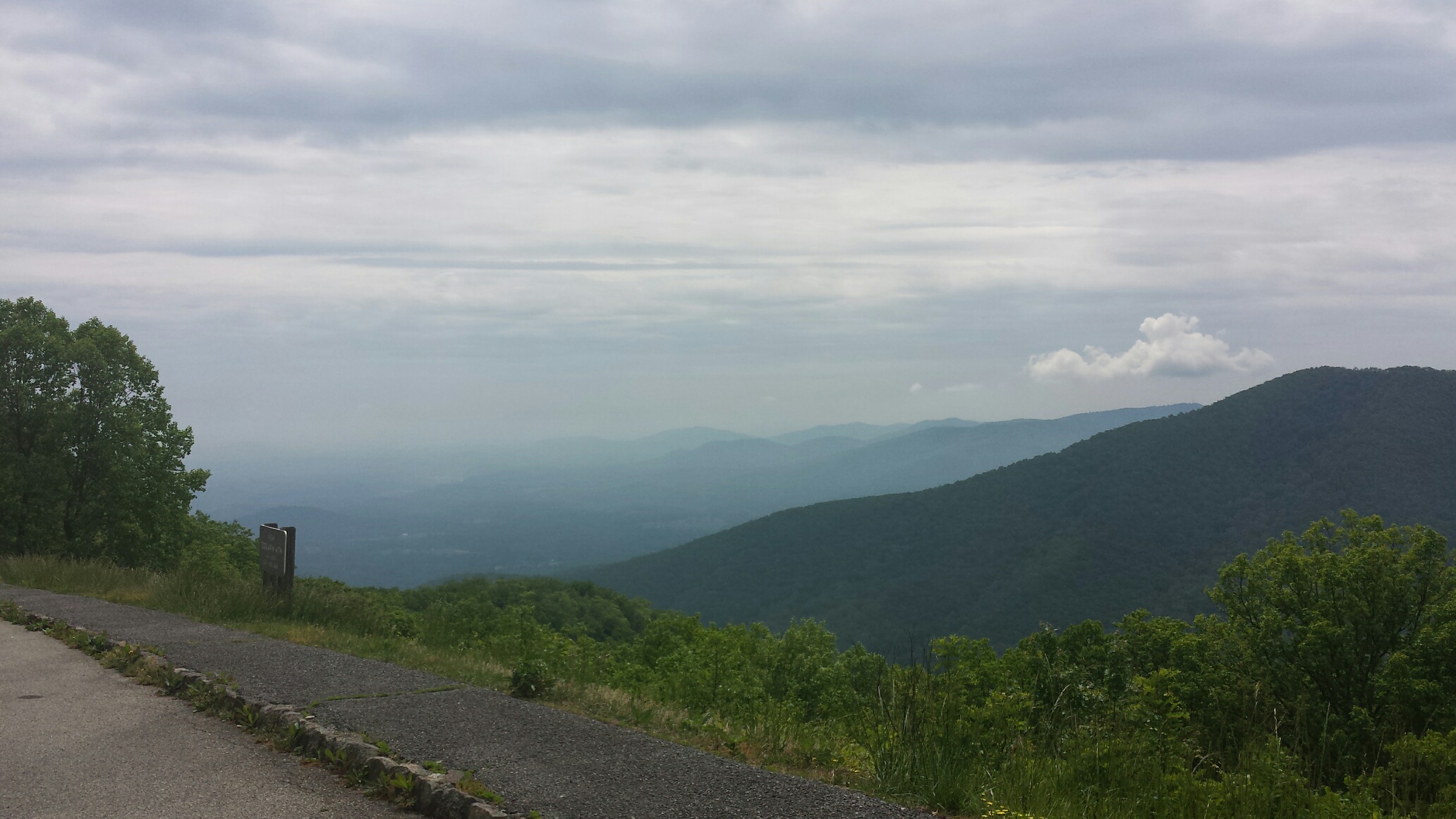
Blue Ridge View – photo courtesy of Deb Reynolds.

6 Pillars Century 2015

Today’s ride: The 6 Pillars Century in Cambridge MD. This is usually the first event on my cycling calendar. Held on the first Saturday in May, 6 Pillars runs from Cambridge on the Choptank River south through the Blackwater Wildlife Refuge to Hoopers Island, then doubles back up the river and circles east, passing through the Blackwater Wildlife Refuge again. The ride itself is tabletop flat, which can take it’s toll on all of a rider’s contact points with the bicycle. This ride is very scenic, taking riders through tidal flats, small towns and open farmland. A rider can expect to see all kinds of birds and other wildlife including Ospreys, Herons, and Red-winged Blackbirds. This year a Bald Eagle made an appearance. This ride is a feast for the eyes. It shows Maryland’s historic eastern shore at it’s best.

The Experience: This year’s edition of 6 Pillars started with a question for my riding friends and I – How much to wear? We tend to start a ride early, and as we gathered at our usual meeting place, the temperature was hovering in the mid 40 degree range.  However, with sunshine in the forecast, and a high temperature forecast for 70 degrees, it was going to get warm by the end of the ride. Anything you start with that you don’t want later becomes dead weight to carry. Everyone had their own answer of course, but I chose to wear a base layer beneath my cycling jersey and arm warmers which I could remove later and put into my pockets. This sacrificed warmth at the start for comfort later; however as I started to warm up on the ride and the sun rose higher, I wasn’t cold for very long.

This year the winds were light at the start. We rode south quickly. My group included Ron Tripp, Deb Reynolds, Eric Sanne, Tony Lehr, Carmen Legato, Carol Linden and John Koehnlein. Some were planning to ride shorter distances due to differences in training or other commitments, but the entire group would be able to stay together until a decision point at approximately 62 miles, so we formed up and rode out, knowing that we would be together for the majority of the ride. I rode near the front of our pack for much of the ride, since I was feeling good. We weren’t moving quite as fast as I’ve ridden in previous years; for many of us, this was our first event and our training wasn’t the best. My own training lacked longer distance rides, though I’d ridden often enough in the spring to have plenty of miles under my wheels. I prepared myself to fight through the full century distance, and the easier pace suited me. The first 40 miles were joyful, with the morning chill leaving me before 10 miles had passed. We arrived at the rest stop at the South end of Hooper’s Island to a surprise: the ride pushed on over another bridge to South Hooper’s Island and turned there. Normally we ride over the bridge anyway, out of a desire to say we rode to South Hoopers, and to enjoy the experience even more, but this time the organizers encouraged riders to cross the bridge to a turnaround point, to ensure that they could get a full 100 miles on their odometers and perhaps to feel the sensation of climbing, which this ride doesn’t readily provide. The turnaround point was painted on the road, but a roadside sign might have served them better.  We passed the turn and rode on for a while, partly to see what was there and partly because we thought the turn point would be better marked.  Quite a few riders went past it. In any case, we weren’t upset; the day was warming up, and we were moving well. Sand fouled my cleats at the rest stop. I had problems clipping into my pedals, and we stopped so I could clean them. I really don’t like to stop a group to do such things, it’s embarrassing, but we all understand the need, so it was okay.   As we returned to the wildlife refuge, we were overtaken by a large group of motorcycles and police vehicles, no doubt part of an organized ride of their own, which prevented us from passing any slower riders while we they passed. By this time the wind was building, so when we were free to speed up a crosswind was working on us until we turned east and it became a tailwind. Other than the issue of a confusing set of arrows on the road which puzzled us briefly, we soldiered on to the next stop, where we had a decision to make.
Carol had a commitment, so she had to take the shorter distance, and Deb was also sure she wanted to take the shorter route. The rest of us were either decided on the full century or leaning that way. The body can do amazing things if the mind will allow it, and the remainder of us all made that decision (easy for some, harder for others) to get the full 100 miles in.
I’ve often said that you can split a century into two equal halves – the first 80 miles, and the last 20. This may not be accurate for everyone, but somewhere between the stops at 62 and 80 miles we all found our focus turning inward somewhat. There is a wall to push past, a place where you need to free yourself mentally and physically to carry on to the end. We all kept up a steady pedaling cadence, pushed on by each other, or perhaps pulled by the prospect of a rest well earned at the end of the ride, and a post ride beer to share with friends. We rolled back to Cambridge in good form,  and celebrated together after that first event of the season. It was a glorious day, made much better by the friends who shared it!

Selections from my mental iPod during the ride: “Industrial Disease” by Dire Straits, “Addicted to Love” by Robert Palmer, and “The Ghost in You” by the Psychedelic Furs.

Stats: 103.61 Miles ridden. A beautiful day, and a ride best described as steady and consistent. A perfect start to the 2015 cycling season.

Rest Stop 1

The first rest stop – still dressed to stay warm!

Scenery

Second Rest stop – looking out over the marshes.

Scenery2

Resting at Hooper’s Island – sadly, standing in sand that fouled my cleats!

Post-Ride

Tired riders, swapping stories and enjoying the sun post-ride.

Bicycle Dreaming

As I write this it’s late February, and another winter weather system is bearing down on me, with a promise of snow and ice and frigid temperatures.  It seems that lately whenever my mind starts to drift, it starts me dreaming of cycling.

This isn’t surprising of course. It’s been a long and cold winter, and that takes a toll on every cyclist. There are 3 ways that I know of to get through the winter – the first is simply to put your bicycle away and hibernate until the spring – which has no appeal once you’re on the roads again, because the hibernators have to grind their way back into condition, and that isn’t any fun at all.  The second way is to ignore winter – there are those who layer up as much clothing as they can stand and just ride through the cold months.  I admire them, because they’re the toughest of all cyclists.  I take the middle route between these strategies.  I spin on a trainer 5 times a week. I push pedals and go nowhere, with the computer registering “phantom” miles. Some riders count these miles. I don’t.  I can’t. To me, that isn’t cycling. It’s several hundred miles per year of going nowhere, and it never feels like I’m cycling. There is no scenery, no feeling of the air flowing by, no feeling of flying, no joy. I can’t use video to fool myself into thinking I’m out on the roads. I can’t make these hours feel like a real ride outdoors. These are hours I spend in a kind of purgatory, alone, pushing my legs and keeping up a base of fitness for that time when the air warms, and my cold weather clothing is warm enough, and I get back on the roads, and the new cycling season starts fresh. If I spin in place, I lose less fitness, and when I ride with friends on those early spring training rides, I hope it will allow me to be in the middle of the group, not laboring along behind it. So I pay the price as the temperature lingers below the freezing mark, and I look impatiently at my calendar, and hope for signs of warmer weather to come, and I spin in place. Spring seems to be waiting just out of reach. I have to be patient. In the meantime, I dream.

As I write this, my bicycle is in the shop for tuning. It’s a good time to do it, while fewer people are thinking about their bicycles. When it comes back to me, my bright red Orbea Onix will have new shift and brake cables, a new chain, the wheels will be trued, the shifting adjusted, and it will have had a general mechanical check-up. This is important every year, and every serious rider will get a yearly mechanical check. However, before the weather warms I’ll have replaced the computer with a model that has an easier to read screen, put on new bar tape, and tended to other fussy little details that are less important when it’s warm enough to just hop on and ride. I’ve been reading cycling websites, and visiting bike shops, and I’ve already purchased all the tires I’m likely to need for the year on sale. In any case, shopping for bicycle gear in the winter is just another kind of bicycle dreaming. When I think of these things, they bring the spring and the riding I crave a little closer.

My email box brings me bicycle dreams on a regular basis. I get notice of ride registrations opening, email from cycling friends to talk of getting together off the bike, and cycling advertisements of all kinds. Some are small reminders, some evoke memories of past rides. I’ve already signed up for two rides this spring – and the memories of those rides from past years weave their way into my cycling dreams.

In my bicycle dreams I’m free – the road rolls and the scene changes; the sun is warm, the breeze is inviting, there are friends riding along, and my breathing is good and it feels like I’m being pulled along with the experience. Every spring these dreams will come true, but for now, with the snow and the wind chill keeping me indoors, these are the dreams that keep me warm.

Celebrating Uttarayan at the KID Museum

Years ago, quite by accident, I discovered kiting. I love flying kites, and the kite form that I was most fascinated by was the Fighter Kite. Through a combination of research, good luck, and meeting others who found Fighter Kites as fascinating as I did was enough to make building and flying fighter kites a joy and passion for nearly 20 years. I’ve become something of a local authority on these kites. I was recently contacted by my local kite club to see if I would volunteer to help a local museum with their program celebrating Uttarayan, the Indian festival celebrating the turn of the sun Northward. Uttarayan is celebrated in a number of ways, but among them is the flying of Fighter Kites. I eagerly agreed.

The Kid Museum is a wonder – it is about experience, and teaching children about science and technical things through experience, all while having fun. Among the ways that the Kid Museum chose to celebrate Uttarayan for the children were dancers performing traditional dances from the Indian province of Gujarat, a gentleman teaching about the Hindi language and helping the children write their names in Hindi, and of course, fighter kite building and fighter kite lore, which I handled with the aid of the Museum’s dedicated and tireless staff.

I had a chance to show kites I’d built, and some examples I’d collected over the years, and I talked to adults and children about the way fighter kites fly, and I demonstrated how cutting line works, and of course, I helped the museum in their kite building classes. I had such a good time doing this, and if the Kid Museum wants me to come back and help again, I’d eagerly accept.

The Kid Museum is a wonderful place, and deserves a look for anyone who knows and loves a child between 5 and 12 years of age.  http://kid-museum.org

Kid_Museum_1

At my table, showing kites, cutting line, and talking about Fighter Kite culture.

Kid_Museum_2

Helping with the kite building classes.

Sailwinds Kite Festival

The Sailwinds Kite Festival is held every October in Cambridge Maryland. The park is alongside the Choptank River within sight of Route 50.  It isn’t a very large area to hold a festival, but the fields are big enough to launch some  show kites, and the community turns out to support the event. With children’s kite building, face painting and other activities, this event brings out the children to enjoy flying kites. It means there won’t be a lot of room to fly maneuverable kites, but this is a family event, and everybody shares the sky. This year the wind was fairly strong.  For me, that’s bad news, because I specialize in fighter kites, and fighter kites like lighter breezes. I had a couple of kites that would be at the edge of being effective in a high wind, so I was hopeful that I could join in the fun. In any case, it was great to watch my fellow flyers at Wings Over Washington fly their show kites.  As for me, I managed to fly a couple of my kites. It wasn’t easy in the high winds, but I enjoyed myself, and I enjoyed watching the children and their parents flying kites on a beautiful fall day.  It’s tough not to enjoy a kite festival. They’re very positive events.

Toothless

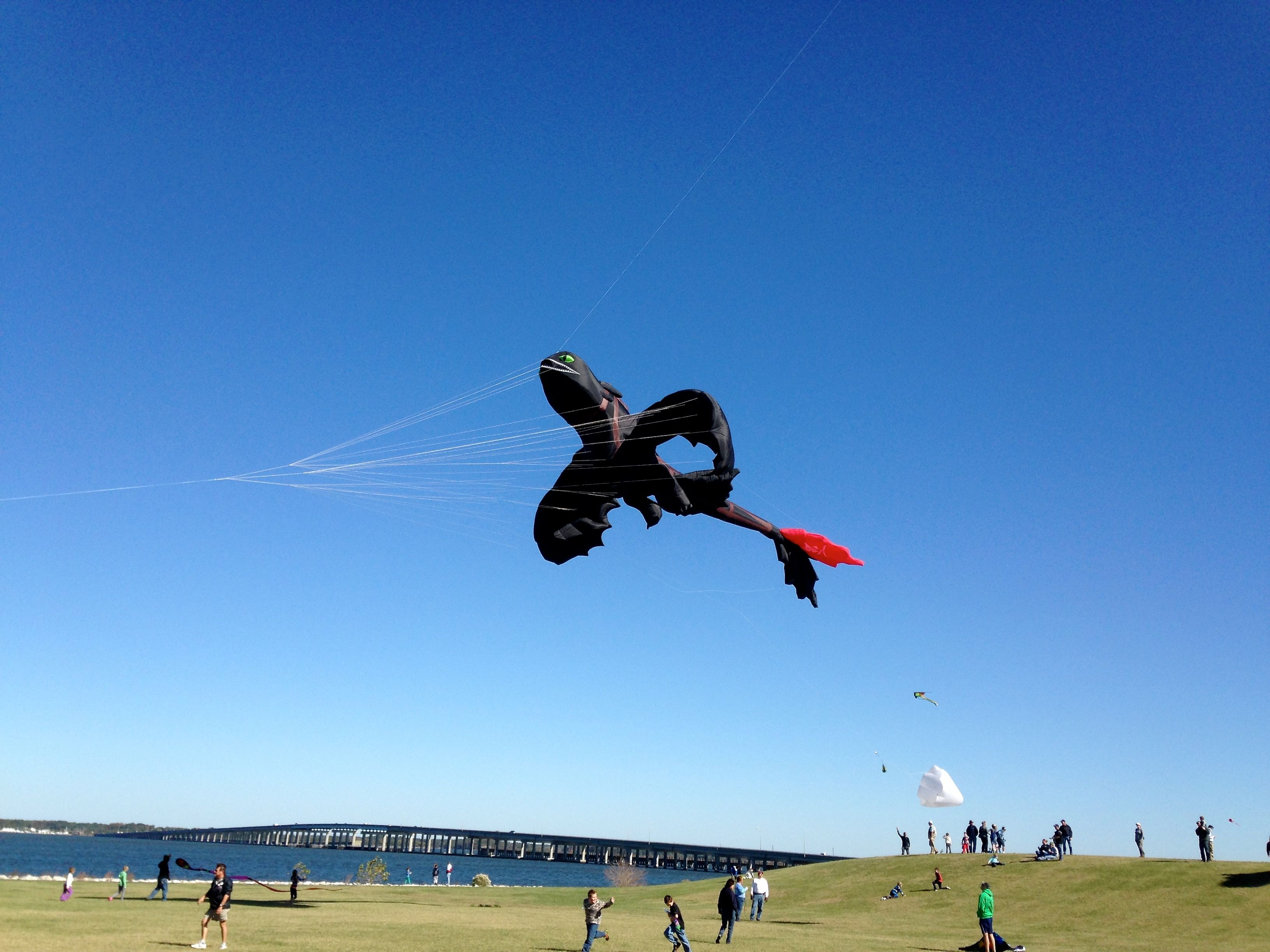
Toothless the dragon rises over Cambridge.

Shark

The Shark delighted the crowds.

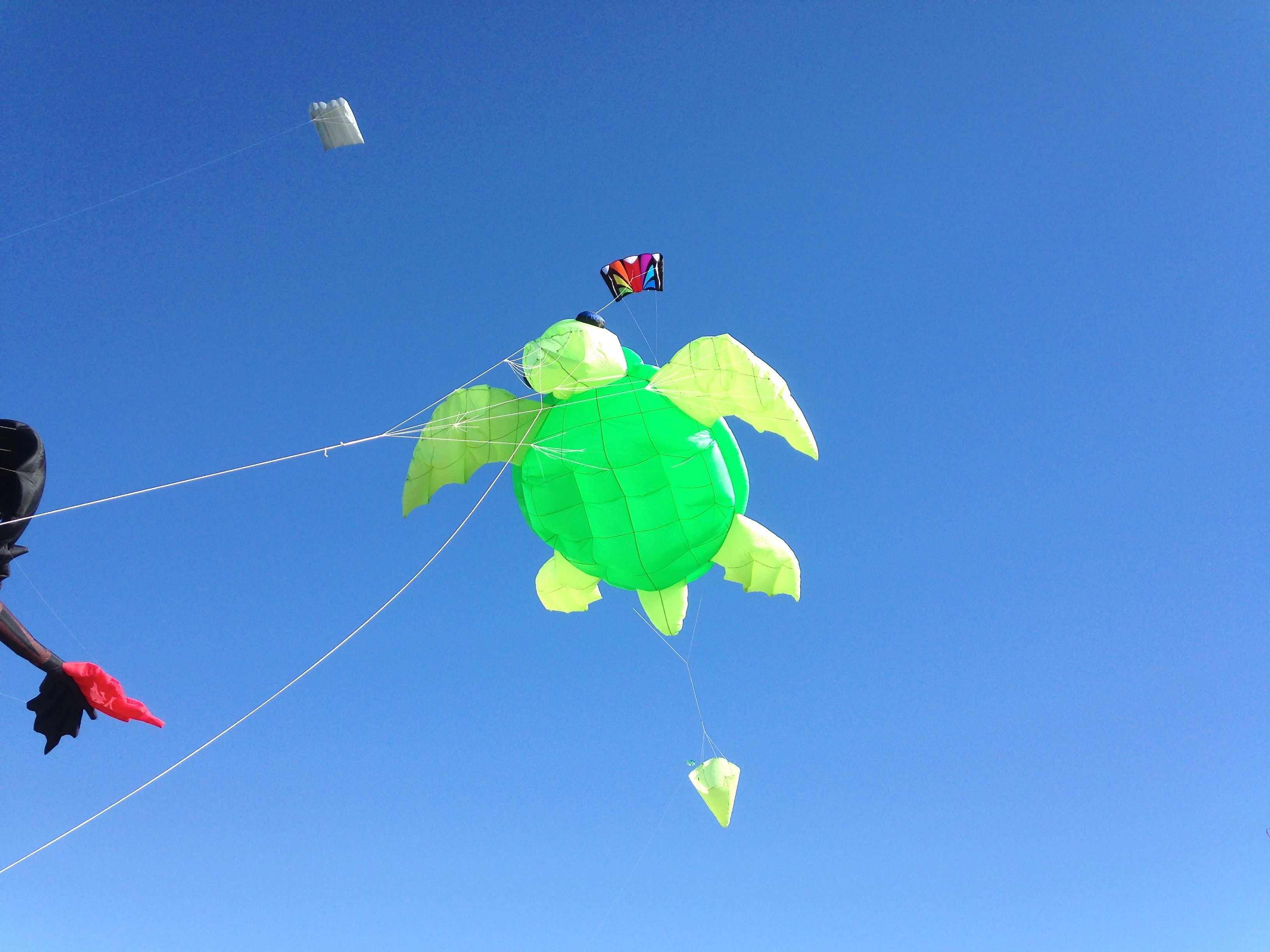
Turtle

This Sea Turtle took flight in the afternoon.

Carp1

This colorful Carp flew well all day.

Seahorses

These Seahorses joined he other aerial sea creatures.

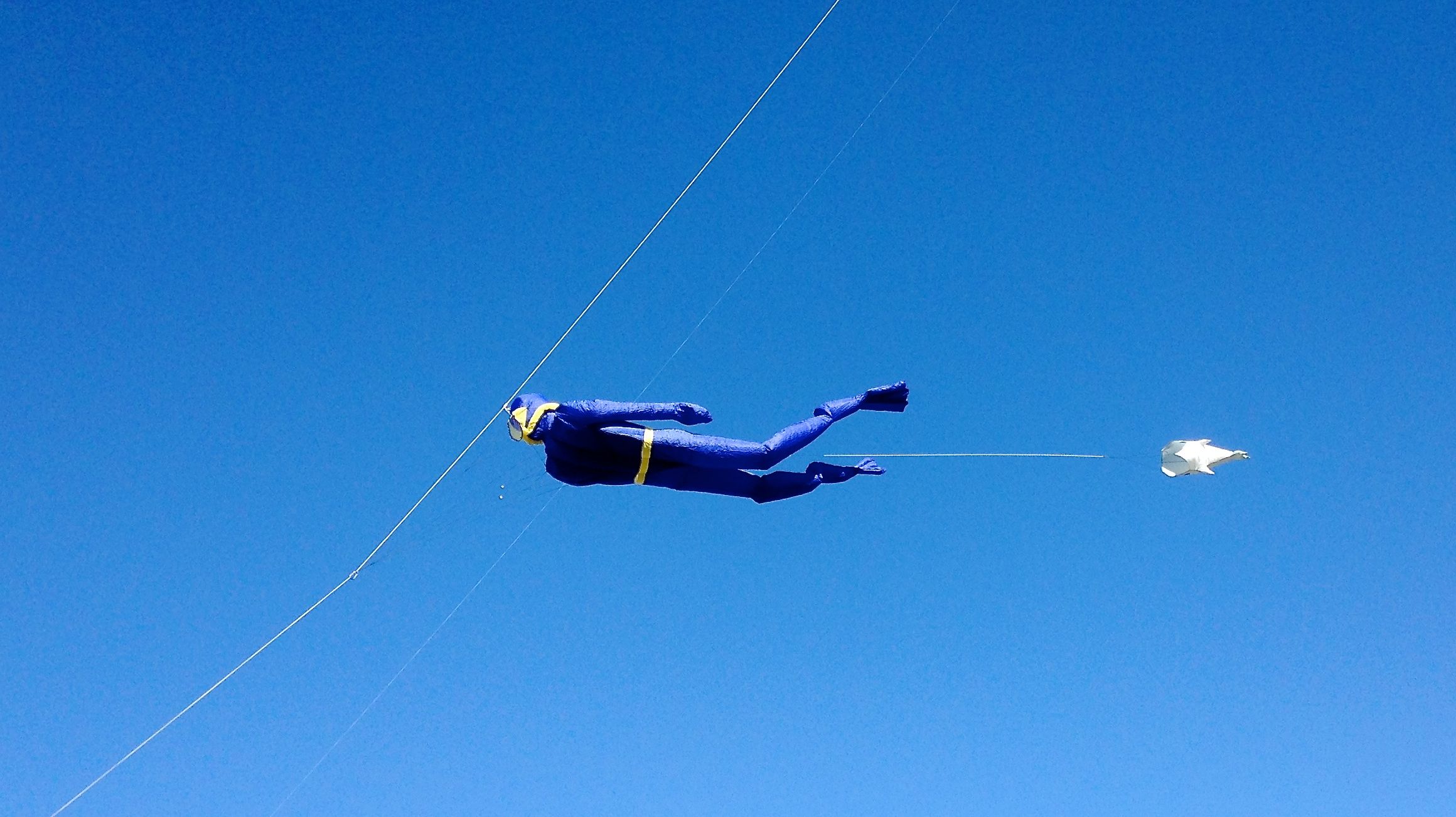
Frogman

A diver completes the theme.


My Variant of the Classic Indian Fighter Kite

Tomorrow I’m going to a Kite Festival in Cambridge, MD.  I specialize in designing and building fighter kites, but I wanted to build a new kite to fly.  I’ve always liked the look of the classic Indian Patang, with it’s distinctive triangular tail. I’ve designed my own variant.  While the classic Indian fighter kite’s tail is a separate piece, my design has a single sheet of sail material.

Sail_Pattern

The photo above shows my sail pattern on the left, a hot-cut Orcon sail on the right, and a bamboo spine I split for this kite, and cut down to size.

Build

As I built the kite, I smoothed the sail down on a damp sheet of tempered glass. I put reinforcements down at the front edges of the kite above the bow, installed the bow and the spine, and reinforced areas on the spine. I use battens as part of the triangular tail part, and the battens also reinforce the lower bridle point.

Sail_Back

Once the sail is complete, the nose has been reinforced, as have the shoulder area where the bow is no longer connected to the sail. I’ve also reinforced the battens where the trailing edge of the sail meets the triangular tail part.

Decoration

I used Sharpie markers on the White Orcon Sail. Orcon is a ripstop film that is flexible and strong. This kite has a bamboo spine and a Carbon bow. I used a stiffer bow than I might normally for this design. Usually I use a .05 Carbon Rod for the bow normally, but I’m expecting high winds tomorrow, so I used a .06 Carbon Rod for the bow in this kite, hoping that the stiffer kite will handle high winds better.

Bridled

Now the the kite is finished. You can see from the front that  the kite has the profile of a classic indian fighter kite, but the tail is actually part of the sail, and the triangular shape is defined by the sail decoration.  The design flies well normally, and I’m expecting good things from this variant.  The spine of this design is 16″ long, and the width is 18″.  A line drawn between the wingtips (wingtip line) would cross the spine 1/2″ above the spine center. The bow crosses the spine 2.5″ down from the nose. The lower bridle point is 4.75″ from the base of the spine. The battens meet the spine 3/16″ above the lower batten point. This allows the batten ends and the lower bridle point to share the same reinforcement.  The battens themselves are .03 Carbon Rods. This design works well using paper or mylar as a sail material. With a .05 Carbon Bow, the wind range is approximately 3-15 mph, with the “sweet spot” at a wind of 5-8 mph.  The kite uses a 3 point bridle to adjust for balance and wind speed.

Shelter Century Fall Foliage Tour

Today’s ride: The Shelter Century Fall Foliage Tour is a charity ride out of Easton, MD. The majority of the ride is on the eastern side of route 50, with stops on the Choptank River and pastoral views. The ride also features a ferry ride across the Tred Avon River from Oxford MD to Bellevue MD, and while the course is not challenging for terrain, the challenge of this ride is coping with the wind. The ride itself is flat as a tabletop, and very scenic.  The finish promised homemade pies! 

The Experience: I was recovering from the flu when I set out alongside many of the usual suspects on this ride; Ron Tripp, Rita Spence, Eric Sanne,  John Koehnlein and Tom Roman. A wise man would not have ridden 100 miles in that condition, but I am a stubborn man, not a wise man.  I felt okay at the start, so I convinced myself that I’d be okay to go the distance. The batteries in my computer were wearing out – in the cool of the morning my display cut out, though it came back when the temperature warmed up, by which time it wasn’t of much use to me. None the less, the weather was beautiful that day, and I was still feeling fine, and I just turned the cranks and enjoyed the morning. There were no road marks for this ride. Only signs placed at turns, so the cue sheet was important. Had there been more of the signs, that would have been no issue, but there was only one sign at turns, and with crossing routes it was important not to miss a sign, so consulting the cue sheet was very important. In the first 50 miles, there were 3 rest stops, all of which were on the water with great views. The problems were logistic. The stop at 50 miles ran out of water and gatorade; two things no rider wants to be without. In the last 50 miles, there was only 1 rest stop, at the ferry landing in Oxford at 77.5 miles.  In a ride where you’re battling headwinds, 27.5 miles is a long way to go without a break. Thankfully the day wasn’t hot, which would have made matters more difficult. A water stop would have been welcome to break that segment up.  However, my personal condition was a more questionable matter. By 70 miles I was having real trouble breathing; the flu wasn’t completely through with me yet and struggling into the wind took a lot out of me.  Thankfully after the ferry ride the winds were with us more; I rallied a little. John kept an eye on me as I suffered through the final 5 or 6 miles;  but I managed to complete the ride and earned the rest at the end.  Had I shortened the ride to a metric century, my body would have been happier. Had I not ridden at all, my body would have been happier still.  But as a stubborn man I simply couldn’t let myself heal. While I paid the bill for that the following day, on that day the ride was inviting, so I soldiered on.  Had I been in better health, I think I would have enjoyed this ride a lot more than I did, and I found a lot to recommend about this ride despite the organizational deficiencies. 

Selections from my mental iPod during the ride: “And if Venice is Sinking” and “The Hammer and The Bell” by Spirit of the West,  and “Panic” by The Smiths. 

Stats: 101.5 Miles ridden.  A good day to ride, through a scenic area with a ferry ride to make it memorable. 

First_Stop

At the first rest stop, in front of course maps.

On_the_Ferry

With John on the Oxford Ferry.