Patuxent Rural Legacy Ride 2016

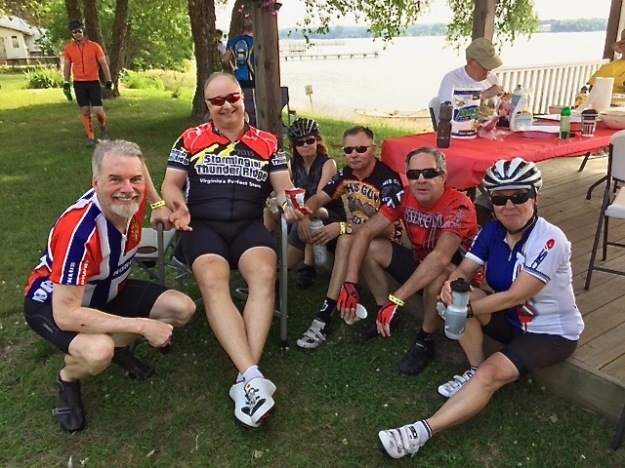
Today’s ride: The Patuxent Rural Legacy Ride is a metric century put on by the Oxon Hill Bicycle Club. It starts in Croom Maryland and runs through parkland and farms along the Patuxent River.  We lovingly refer to this ride as “Pax Legacy” or simply “Pax”, since my friends and I will seldom miss the opportunity to ride it.  It’s well supported, well run, and scenic. While it’s known as a hot weather ride, much of the course is shaded, and this is the kind of event that we are all happy to support.  Ride distances include the full metric century at approximately 64 miles, a 44 mile option, a 35 mile option, and a 22 mile option. All of the options include a stop at the Merkle Wildlife Sanctuary. Regardless of distance, this is a ride that requires hydration, but it is very well supported and extremely enjoyable. The Oxon Hill Bike Club holds a picnic afterward. Riders are well looked after at this event.

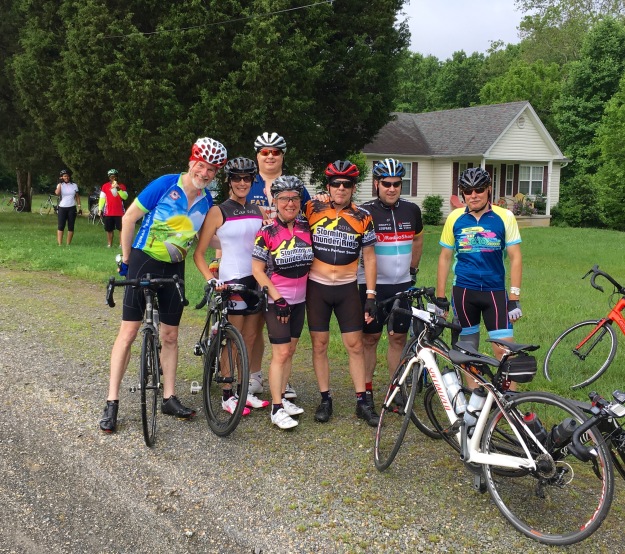
The Experience: As usual, my team and I were among the first to arrive. The forecast called for a hot, and humid day, and we intended to get going by 7:00 to get as far into the ride as possible before the heat of the day.  Rita had a little mechanical trouble, and needed some brake adjustments, but we got going at 7:15 while the majority of riders were still on their way to the start. Seven of us were out on the road – Myself, Ron, Rita, Stephanie, Eric, Carol and John – most of the usual suspects I ride with -though we had a lot of friends and acquaintences on the road that day. While I had a good ride, I was feeling the heat and managed to be consistent despite not feeling like I was at my best. The first section was just over 20 miles to Magruder’s Landing on the Patuxent. We set a comfortable pace, and I settled into the ride. John and Carol had gone ahead, but we met them at the first stop, and managed to get going again just as the area started to get a good crowd of riders coming in. The ride rolls, particularly on the Metric course, and the section between Magruder’s Landing and Eagle Harbor had some good climbs, but I rode them well and kept drinking – the secret to riding in the heat. Eagle Harbor is past the halfway point of the ride, but coming out involves a climb out above the river. The next stop was the Merkle Wildlife Sanctuary, 18 miles from Eagle Harbor. By this time Rita was concerned about her bike and the group splintered on the hills. John and Eric got to the front, and I was behind them, just in sight. Behind me were Ron and Stephanie, and Carol was grinding her way up the hill behind them. With about 5 miles to go until Merkle, Eric had ridden ahead, John had waited for Carol, and I found myself riding alone. I waited for Ron and Stephanie and the three of us rode to the rest stop together. We would all gather and leave Merkle together. As we rode in, I encountered the son of a friend from Arlington, VA. Rad was riding well, and had dropped his parents. He joined us for refreshments, but left to finish before us. By the time we got in, Eric had left, but we knew where he would be when we got back to the start. We had the chance to meet Merkle’s resident owl, and  pulled together to finish.  We ended up splitting into pairs on the climb out of Merkle – I found myself in front with Stephanie, Ron and Rita rode together, and John and Carol did the same. The finish was at a low point, so the final 3 miles were mostly downhill. We cruised to the finish and all gathered to celebrate in the shade. We’d earned our beer that day!

Selections from my mental iPod during the ride: “Not Only Numb” by The Gin Blossoms, “Letter to Elise” by The Cure, and “Ants Marching” by The Dave Matthews Band.

Stats: 63.61 Miles ridden, at a fairly strong and consistent pace despite the heat.

Mag_Landing

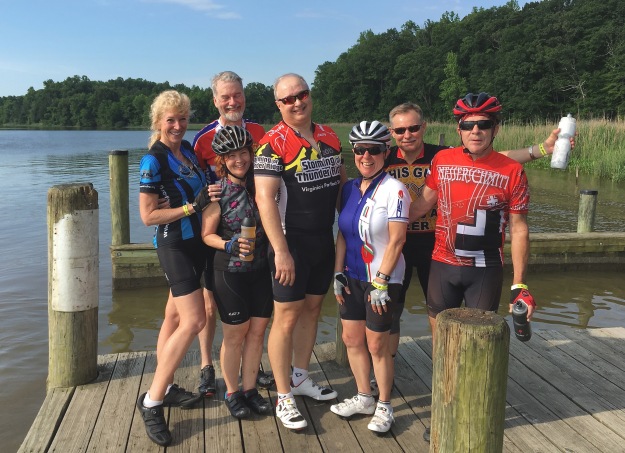
The crew on the dock at Magruder’s Landing – Stephanie, Eric, Rita, Myself, Carol, Ron and John.

Eagle Harbor

Beating the Heat at Eagle Harbor, just over halfway though the ride. Stephanie gets the photo credit!

Owl1

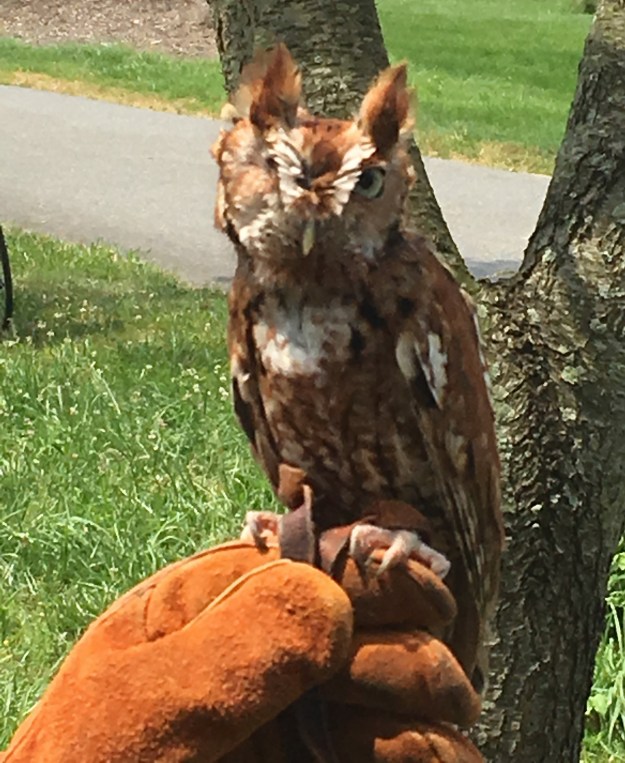
We met up with this Screech Owl at the Merkle Wildlife Sanctuary again this year. She didn’t seem to be bothered by all the attention she was getting from the bike riders.

Owl2

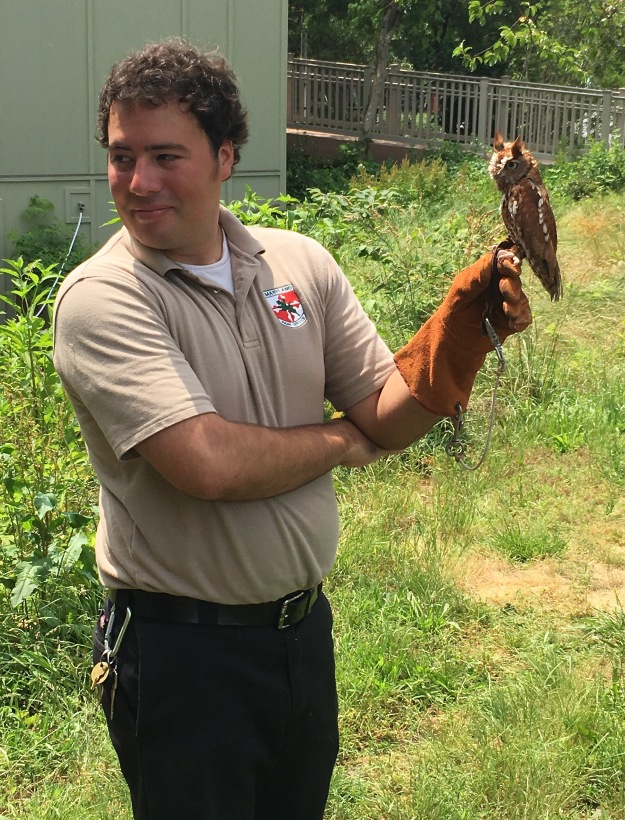
Despite her diminutive size, this owl is a full grown adult.

SMECO 75 – 2016

Today’s ride: The SMECO 75 is a rolling ride in Southern Maryland. It’s sponsored by the Southern Maryland Electric Company, thus the unusual name. It’s an “in-between” distance, not the typical Metric or English Century distance of 63 or 100 miles, but that in itself is a novelty. The roads are generally good; there are some climbs to deal with, but they’re not long or particularly steep, and the ride is very well supported.  While the ride tends to fall on hot days, since it’s held on the first weekend in June, SMECO doesn’t make you wait too long for water. There are plenty of stops. This ride gives away a lot of little gifts with your registration, including a drawstring bag and a stylish water bottle – not the kind you take on your bike, but the kind you’d see at the gym or keep at your desk at work. The ride also goes through Southern Maryland’s Amish community, so you might see the occasional horse and buggy on the roads.

The Experience: In keeping with 2016’s weather pattern, this ride held out the threat of rain. My friends and I decided to leave by 7:30 to reduce the chance of being rained on.  It was foggy and humid, but not warm at the start. Experience warned me to stay hydrated and hold on to some energy for the end of the ride. I was in a pensive mood, in contrast with the ebullient Eric, who finds delight in any gathering. We were joined by John, Carol, Tony, Ron and Denise T, who was riding her new Cervelo S-5 dream bike. We rode out into a lifting fog. While the temperature was comfortable, the roads were damp in areas that would normally be shaded, so we had to be careful when riding downhill. Conditions didn’t favor seeing every obstacle. One memorable feature of this ride is a short, steep climb just before the first rest stop. This year the ride route took the same hill from a different direction, which made it a longer, easier climb, though still a significant effort. For some, this might be a good feature, but part of me wanted to feel the strain, to breathe hard and work my way up that steep climb. As it was, we still had a climb, but the flavor was a little different. It didn’t detract from our enjoyment. As the ride went on, the weather never changed. It was cloudy and humid, but the rain didn’t arrive. With the exception of a bee sting on Carol’s shoulder, which was tended with care at the final rest stop, there were no challenges to us; the heat stayed manageable, and the ride was thoroughly enjoyable. 75 miles is an odd distance. Like a metric century, it doesn’t reach very far into your reserves. 100 miles is always a test, but 75 is more manageable if conditions are good.  Without the usual heat, this year the SMECO 75 seemed more tame. That suited me just fine!

Selections from my mental iPod during the ride: “My Ever Changing Moods” by The Style Council, “Soothe Me” by Sam & Dave, and “Stone Cold Sober” by Del Amitri.

Stats: 74.85 Miles ridden, well within the margin of error for my bicycle computer. I decided not to circle the parking lot just to make up the distance number. Some days close is just fine.

SMECO_Group

The rogues gallery for SMECO 2016 – Eric, Denise, Myself (hiding at the back) Carol, John, Tony and Ron at the first rest stop.

Tom_SMECO

Holding up a wall at the third rest stop.

In Defense of Bad Coffee

I admit this freely – I’m a connoisseur of bad coffee. Something about bad coffee stirs my imagination. Something in the stinging shock and realization implied in the phrase “Dear GOD, what am I drinking!?” speaks to the awesome power of bad coffee, particularly when it’s a phrase that you’ve repeated many times over the course of your life. I’ve had so much bad coffee that I’ve begun to appreciate it.  Make no mistake, I’ve had good coffee too. I appreciate good coffee, but there is something about bad coffee that fires the imagination at the same time that it assaults your taste buds. There is an entire culture built around bad coffee, and in response, the clamor for good coffee has created marketing opportunities as well. However, these are entirely different things, and without bad coffee, there would be no market for good coffee.  I think a celebration of bad coffee is long overdue. In this fast paced, overworked, sleep deprived culture that we live in, bad coffee keeps society moving.

We all know what good coffee is. Good coffee is an experience. You seek it out with delight. It can be made at home, according to your own exacting standards. It can also be made by highly skilled and cheerful young men and women whose skill turns a bitter caffeinated beverage into something sublime. Good coffee is a subtle balance of factors and flavors, lovingly blended into a taste worthy of calling an “experience”.  It has taste, presentation, and even anticipation going for it. Good coffee takes TIME. When you have good coffee, the world awakens around you. You don’t mind waiting for good coffee. Or paying a higher price for it. Good coffee is the stuff of dreams.

So let us ignore good coffee and extoll the virtues of bad coffee. Now I know that there are people who will tell you that there are no virtues associated with bad coffee – but I’m here to tell you they’re wrong. Bad coffee does have virtue, you simply need to be in the right frame of mind to recognize it. The universal truth about bad coffee is that bad coffee is cheap, simple to brew, available immediately when you need it, is hot, distracts you from dealing with other problems, and best of all, will keep you alert and functional.  Bad coffee has drawbacks, and most people can name one or two without thinking too much, but bad coffee serves a purpose. In many ways, it’s like a bad drug.  You know the long term effects are dangerous, but you don’t particularly care about that when your need is prodding you RIGHT NOW.  Bad coffee isn’t inspiring.  It won’t move you. It will get you moving though.  That can be a virtue.

Bad coffee can be found almost anywhere.  Convenience stores, gas stations, diners, the continental breakfast at affordable hotels, and even in some places where drinking bad coffee is counter intuitive, such as most kinds of waiting rooms. It is supplied in many businesses as a courtesy to the employees, and is always the kind of coffee dispensed from public vending machines. You cannot get good coffee from a public vending machine. It simply isn’t possible, for reasons that will become apparent as we explore the topic.

It is widely known that bad coffee, shared among friends in the right conditions, doesn’t actually feel like it’s BAD.  Particularly if you don’t know the difference between a really good cup of coffee and a bad one. However, the key point in this situation is that the focus is on the friends and conditions, which distracts the drinker from the realization that the coffee is in fact bad.  This might be the only time when bad coffee and good coffee have overlapping experiences.  However, the realities of bad coffee will always apply – it is hot, cheap, simple and immediate.  Bad coffee can be sophistication for people who lack the time and resources to be truly sophisticated.  That is a wonderful thing, and I applaud it.

Putting that aside, bad coffee can be defined as a virtual need. Bad coffee does not require context like good coffee does. Bad coffee hits you like a lead pipe to the back of your head and makes you alert. Bad coffee transitions you from a sleep deprived, fatigued and potentially dangerous individual to a functional individual. (Though perhaps with a few uncontrollable tics or twitches that are usually just harmless side effects. Your experience may vary.)

Good coffee requires care in preparation.  Bad coffee just seems to happen to you.  It is prepared quickly, often in large quantities. You can add sugar or milk or creamer to it.  Often the creamer is powdered. Usually that doesn’t matter though.  The intent of bad coffee additives is not necessarily to add flavors; in fact many purveyors of bad coffee provide flavored creamer for just that reason, but that isn’t important. Bad coffee additives are there to make bad coffee drinkable to each individual. Bad coffee is dangerous in its unaltered form. Even decaf.  Most people use these taste buffering additives to personalize the cruel shock that they’re actually looking for when they seek out bad coffee. It is sometimes offered in a way that gives you choices other than simply regular or decaf, but in the end no matter what flavors are bound up in the beans and the brewing, no matter where bad coffee is sourced from, the effect is the same, because the process of delivering it to the consumer is similar.  Coffee that is delivered with care is done where maintenance and care actually HAPPEN.  Not so with bad coffee.  Speed requires shortcuts.  Cleaning drip baskets or carafes takes time. Time that isn’t available to the consumer of bad coffee, and to keep up with demand, the tar buildup in bad coffee delivery systems is often extreme. This is why you can’t get good coffee from a public vending machine.  Bad coffee is quick. It includes various things that won’t be delivered with good coffee due to speed, including whatever falls from the beard of the guy preparing it into the filter before the coffee is brewed.  Bad coffee is not for the weak.

Bad coffee is certainly corrosive to the digestive tract, but I wouldn’t be shocked if it were found to be corrosive to everything else as well. Most bad coffee comes in paper or Styrofoam cups for convenience. (Remember –cheap, fast and hot are the benefits.) When cooled, bad coffee will leave a ring of sludge in the cup. (Probably in your esophagus as well.) This leads me to believe that in time, bad coffee would dissolve a paper cup. This is why it is stored in more durable containers that are highly corrosion resistant, such as ceramic, glass or stainless steel. Thankfully the benefit of bad coffee is such that you’ll finish the coffee before the coffee can destroy a paper cup.

What bad coffee will do for you is get you moving when nothing else will.  It will keep you alert when you need to be alert. It will do so quickly and cheaply. Who could ask for more?  I have a variety of ratings for bad coffee, from the highly rated selections in the unfortunately named Wawa convenience stores, to the extremely bad offerings in waiting areas at tire shops.  They’re all bad, but they all fill a need.

So the next time you finish a cup of coffee, purchased in haste, which renewed your will to live while mugging your taste buds and scouring your esophagus, and think “what an awful cup of coffee” please remember to smile.  That bad coffee just did exactly what it was intended to do. Don’t forget to appreciate it.

Storming of Thunder Ridge 2016

Today’s ride: Storming of Thunder Ridge is a challenge ride out of Lynchburg, Virginia. There are several distances to ride, including 100 miles, 75 miles, 45 miles and 21 miles. The two longest rides climb the Blue Ridge Parkway to the top of Thunder Ridge.  This is a 13 mile climb, with a rest stop after 7 miles of climbing. The reality of climbing 13 miles is that you’re literally climbing for over 2 hours. The remainder of the ride includes descents off the ridge and some rolling terrain with short, sharp climbs.  It is a good ride that is well supported. If you want to climb, or challenge yourself, Storming Thunder Ridge is an excellent ride, and an experience that you shouldn’t miss.

The Experience: This year was cool and damp. It had an effect on me, and as we got started, it was quite cold for Mid-May, and the forecast called for rain. The first 25 miles before the climb were rolling, and made an excellent warm up for the big climb ahead. At the base of the climb, it was cold, and rain began. I was climbing steadily, but I was feeling some pain in my achilles tendon. At the midway point, I was hurting, but I was determined to make it to the top.  By the top, I was in pain. Coming down while in pain would not have been safe, and having gotten to the top, I felt that it was wise to end my ride there.  I rode with friends the entire way up, but there was no safe way down.  I got a ride back to the start. It was difficult, but I made the climb, and I can always hope that next year will be warmer.  It took several days to rid myself of the pain, but the experience of that climb was important. It’s what I came for, and I got it.

Selections from my mental iPod during the ride: “Three Little Birds” by Bob Marley and the Wailers.

Stats: 38 Miles ridden, with a major climb. A hard day, but a good experience.

Thunder_Ridge

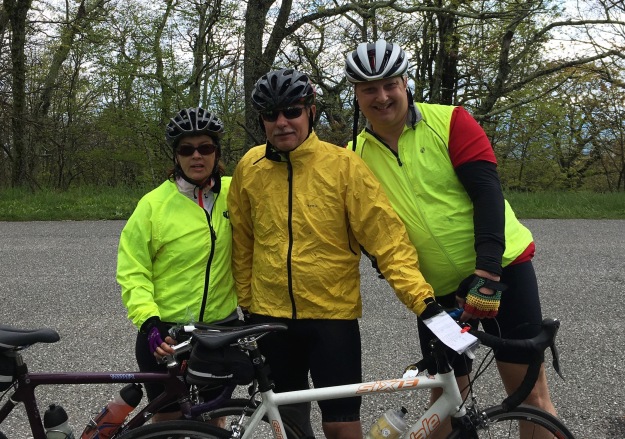
At the top of the Ridge. Left to right – Rita Spence, Ron Tripp, and Myself.

6 Pillars Century 2016

Today’s ride: The 6 Pillars Century in Cambridge MD. Held on the first Saturday in May, 6 Pillars runs from Cambridge on the Choptank River south through the Blackwater Wildlife Refuge to Hoopers Island, then heads back up the bay and circles east, passing through the Blackwater Wildlife Refuge again. The ride itself is very flat, which can take it’s toll on all of a rider’s contact points with the bicycle, hands, seat and feet. The largest hills on the ride are bridges, and the conditions that will take the biggest toll on riders is wind. 6 Pillars takes riders through tidal flats, small towns and open farmland. A variety of birds and other wildlife can be seen in the Blackwater Wildlife Refuge, including Ospreys, Herons, and Red-winged Blackbirds.

The Experience: This year’s 6 Pillars Century started out with the threat of rain. The forecast didn’t call for it, but the hours before dawn were wet. By 7am the rain had stopped, leaving wet roads and gray skies overhead. At 7:30, my group set out with layers for warmth and rain protection, but as the morning progressed, it was only needed to keep the spray from our tires off of us. 7 of us rode together – Myself, Ron, Tony, Eric, John, Carol and Stephanie – who was riding her first century. It was a calm morning, and we rode at a comfortable pace out of Cambridge, staying together. At the first rest stop we picked up another rider, Holly, who rides with the Oxon Hill Bicycle Club and knows most of us. As we rode on, the weather had been improving. We left the second rest stop and headed to Hooper’s Island with a tailwind. John, Eric and I jumped out at the bridges and sprinted over them for fun. We crossed over to South Hooper’s Island and turned back, with the roads starting to dry and the wind picking up. We pushed back into the wildlife refuge and made the rest stop at 63 miles feeling good. By that time our fist time century rider had gone as far as she ever had on a bicycle, with 38 miles to ride. The next leg went through some marshland over roads that were often submerged at high tide.  At one point, because of the rains over the previous week, we found ourselves riding through approximately 100 yards of standing water. As we rode into the final rest stop, the sun had come out and the temperature had gotten into the low 60’s. At that point my jacket wasn’t needed, so I folded it up and put it into a jersey pocket. I was feeling good, and rode to the front with Eric. We soon found we’d broken away from the group.  Instead of sitting up, we finished strong, and waited for the others, including Stephanie, who came in with Ron and Tony to finish her first century. In the end, we came back to the parking lot and celebrated our ride.

Selections from my mental iPod during the ride: “Manhattan” by Eric Johnson, “I Love You Suzanne” by Lou Reed, and “E=MC2” by Big Audio Dynamite.

Stats: 100.12 Miles ridden. A cool day with warm company.

6Plr1

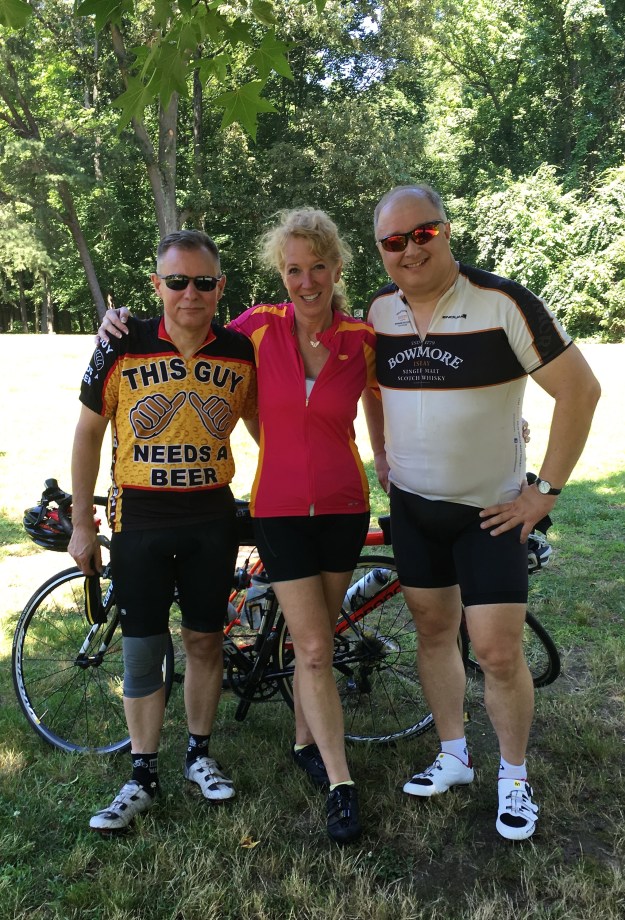
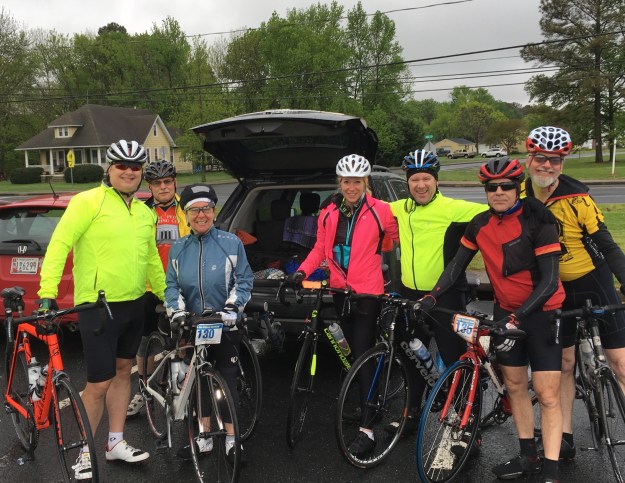
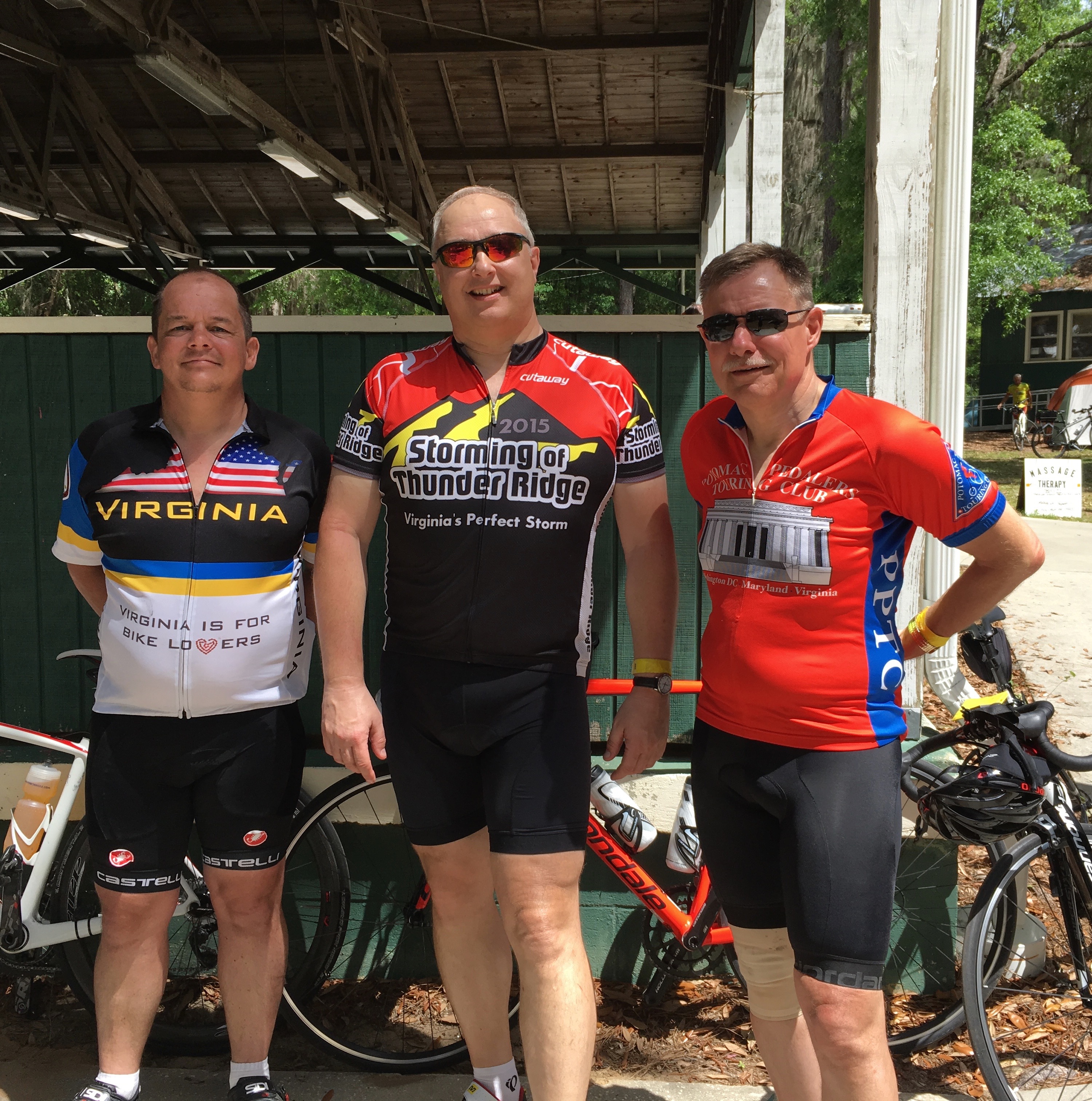
Getting ready to start. Tom, Ron, Carol, Stephanie, Tony, John and Eric.

6Plr2

Eric and I at the Third rest stop, at the North end of the bridge between Hooper’s Island and South Hooper’s Island.

6Plr3

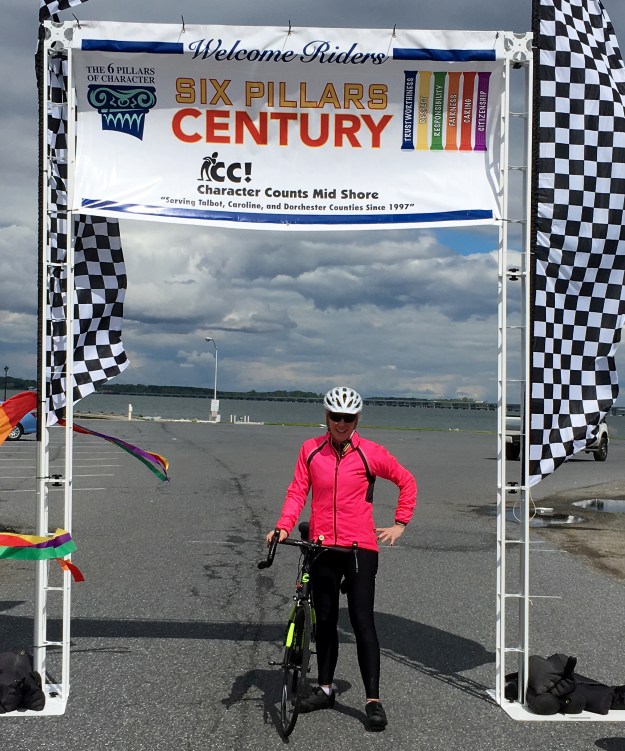
Stephanie at the finish – Her first century ride is complete!

6Plr4

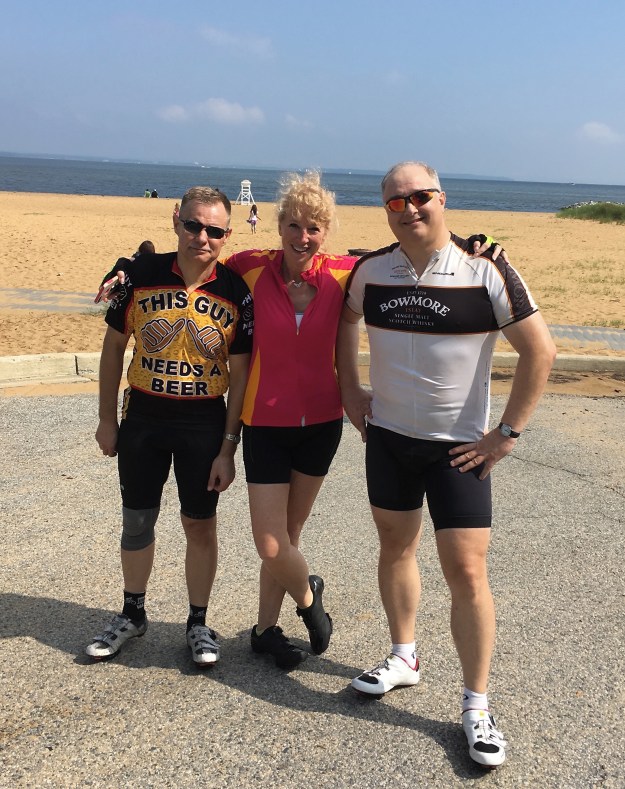
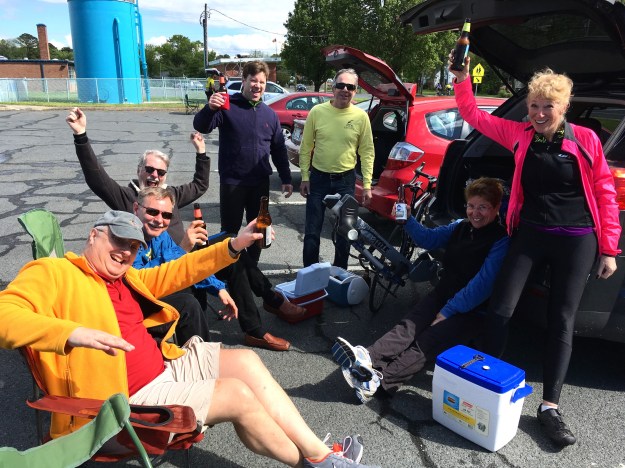
The Celebration Post ride.  The sun is out, and so are the smiles!

2016 Florida Safari

The ride(s): The Florida Safari is a week long series of rides in Northern Florida and Southern Georgia put on by the Florida Freewheelers bicycle club. There are 3 day and 6 day ride options. The first 3 days rides are from Live Oak Florida, and the last three days rides are based out of Cherry Lake Florida. The cost includes food and entertainment; and the food is very good. The courses are rolling but the climbs aren’t steep. There are a variety of distances offered each day, with two days offering full century courses. The courses were well marked and the rest stops were well placed and well stocked. The support was excellent. The Safari organizers are cyclists themselves, and they paid a great deal of attention to detail. It is a week long experience that riders tend to return for year after year.

The Experience: I have heard about this event for many years, since my friend Ron has been riding it and talking about it – and this year I finally had a chance to see for myself what he was talking about. The Safari did not disappoint. I came to Florida with high hopes of experiencing all that was available to me, and had I spent more time on my bike, whether on the road or a trainer and less time in my office, I might have done so.  However, conditions and deadlines made that difficult, and I approached the Safari as training in itself.  I had hoped to ride a century or two, but in the end I rode a metric century, or it’s equivalent distance on average each day – which was enough to get me in much better condition by the time I headed north to Maryland again. All the while I was dealing with camping and meeting new people and trying new things. When Ron and I arrived in Live Oak, we connected with another friend, John Summer from Fredericksburg Virginia.  I’d met John last year when he came up to Maryland for a training ride in September – he was planning to ride the Seagull Century, which was washed out by Hurricane Joachim.  He is a good natured man and a talented rider, and the three of us rode together for the most part. Since John and Ron were veterans they had done something that I had failed to do – prepare. Still, as camp mates we all got along. The normal good natured banter that is typical of these occasions applied, and in the spirit of the occasion, we cooperated in camp and on the roads.  It was a good arrangement. While my companions both got maximum miles from their Safari, I did not. This didn’t bother me too much – I was satisfied with the miles and progress I made.  When I do this again, I will be much better prepared, and perhaps then I’ll go for maximum miles, if conditions allow. The important part was the experience, which included some triumph and misfortune for me, but we had fun, we had rides, and we had beer.  All the ingredients for a memorable event were there. Setting aside the drive to and from home, the Safari was a 6 day event, so I’ll present a few notes by day:

Day 1 – A mass start from the fairgrounds for a 67 mile ride to kick off the Safari. We were near the front and set off quickly.  Some riders left early, so there were a lot of riders on the course, but we were ready to ride and we did so, at a good pace. I enjoyed myself but in retrospect it was foolish to put so much energy into riding on the first day of a 6 day event. I remember rolling back to Live Oak after a day in the hills at a virtual sprint. It was great fun, but my new bicycle didn’t quite have the fit dialed in. After we finished I was more tired than I should have been, and worse – I had a sore left knee. All that after having had little sleep after camping for the first time in years. No problem. We had beer back at camp!

Day 2 – I set out with my left knee complaining quite loudly, and the rest of my body complaining somewhat less. I would pay for that early speed on day 1. I wanted to ride the century that day – but that would not have been wise. At the first rest stop I went to the Safari mechanic at John and Ron’s suggestion – a true bicycle whisperer named Diane, and talked about my aching knee. She checked my position and adjusted my saddle, and I felt better immediately! My knee was still tender, and the conditions were challenging, including headwinds over 20 MPH that day – so after suffering through 67 miles, my body surrendered. I caught a lift back to camp. No problem. We had beer. There was a band playing and good food, too. My body began to adjust to the new normal.  I found lying on the ground no barrier to getting 5 or 6 hours of sleep.

Day 3 – Transition to Cherry Lake.  Breakfast. Break camp. 58 miles to the lake. My legs feel fatigued. I let my camp mates go ahead after the second rest stop, and rode in alone.  A funny thing happened – I didn’t really slow down.  I just needed more rest. Riding alone for half the ride was good. I didn’t feel like I was holding the others back.  Cherry Lake turned out to be beautiful. I found that I could ignore my aching muscles and relax with the guys.

Day 4 – A century day, but I decided to go ride the metric+  and see who I could find to ride with. I ended up riding with a group from the Florida Freewheelers.  I had a good time with them. They were also going to go for beer, so I was invited to their campsite that evening to swap stories and sip.  I hooked up John and Ron with the group and we were once again celebrating a day on the bike with beer.

Day 5 – A metric + ride into Georgia. I am back. Despite my aching legs, I can roll with my friends, and it feels good. The scenery is gorgeous, and the riding feels good, and the banter is familiar. I’m riding the way I want to. Bliss. This is the last night at Cherry Lake.  The beer is provided, along with a barbecue dinner that is wonderful. Ron uses his experience as a DJ and radio expert to win a trivia challenge from our entertainer – and gets a T-Shirt for it. We feel spoiled. Safari feeds you well!

Day 6 – Back to Live Oak, our cars, and the end of the Safari. I am feeling good again. At the first rest stop, I am greeted by a friendly Border Collie. I love dogs.  As I’m getting ready to ride again, I get a bump on my calf. I’ve been head butted by that little herding dog.  Being herded by a Border Collie is a sign that I have to get moving and finish my Safari. The ride back includes the only busy road we took all week – and despite my getting a little too close for my comfort to a logging truck as I came off the front after pulling into the wind, the ride goes well. We arrive at the fairgrounds, pack up, shower, say our goodbyes, grab a complimentary slice of pizza, thank our hosts, and get on the road back to Maryland.

I’ll remember a lot – camping, sunrise and sunset over Cherry Lake, coffee at 5:30 in the morning before jumping up into the queue for breakfast at 6, the excellent meals, the courses that challenged the notion that Florida is all flatland, all the great people to talk to, the roadsides full of wild flowers, owls calling at night, train whistles at night from the crossing in Live Oak, landscapes a painter would love, and good company along the way.

Selections from my mental iPod during the ride: Far too many songs, with far too many musical genres to mention. Needless to say, music traveled with me wherever I rode.

Statistics: 372 Miles in total. Not bad for an out of shape man getting short sleep. They are wonderful base miles for rides later in the spring!

FS_01

In camp at Live Oak, on arrival.

FS_02

Day 1. Suanee Bicycle Association rest stop.

FS_03

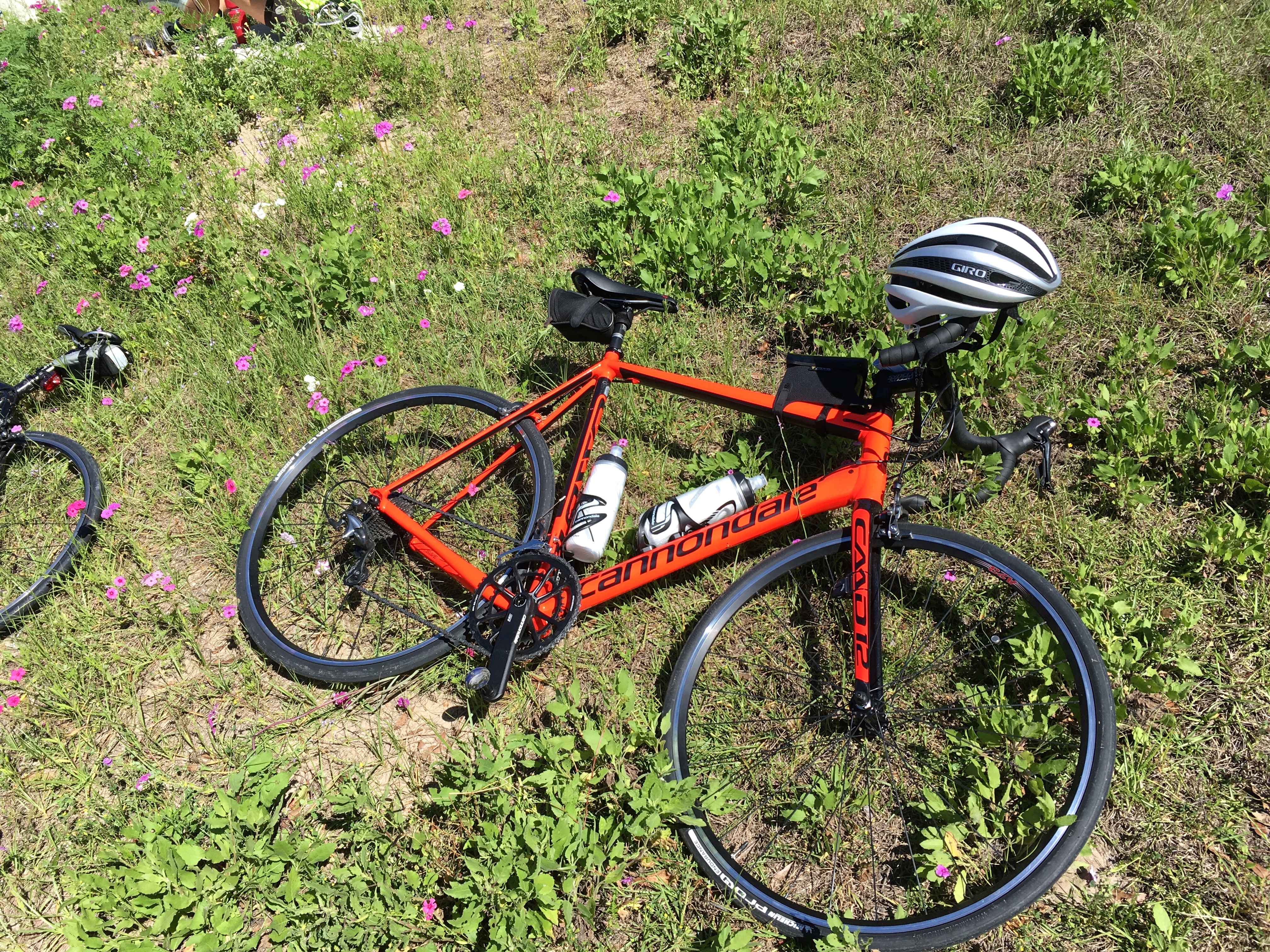
Day 3 – My bike among the roadside flora.

FS_04

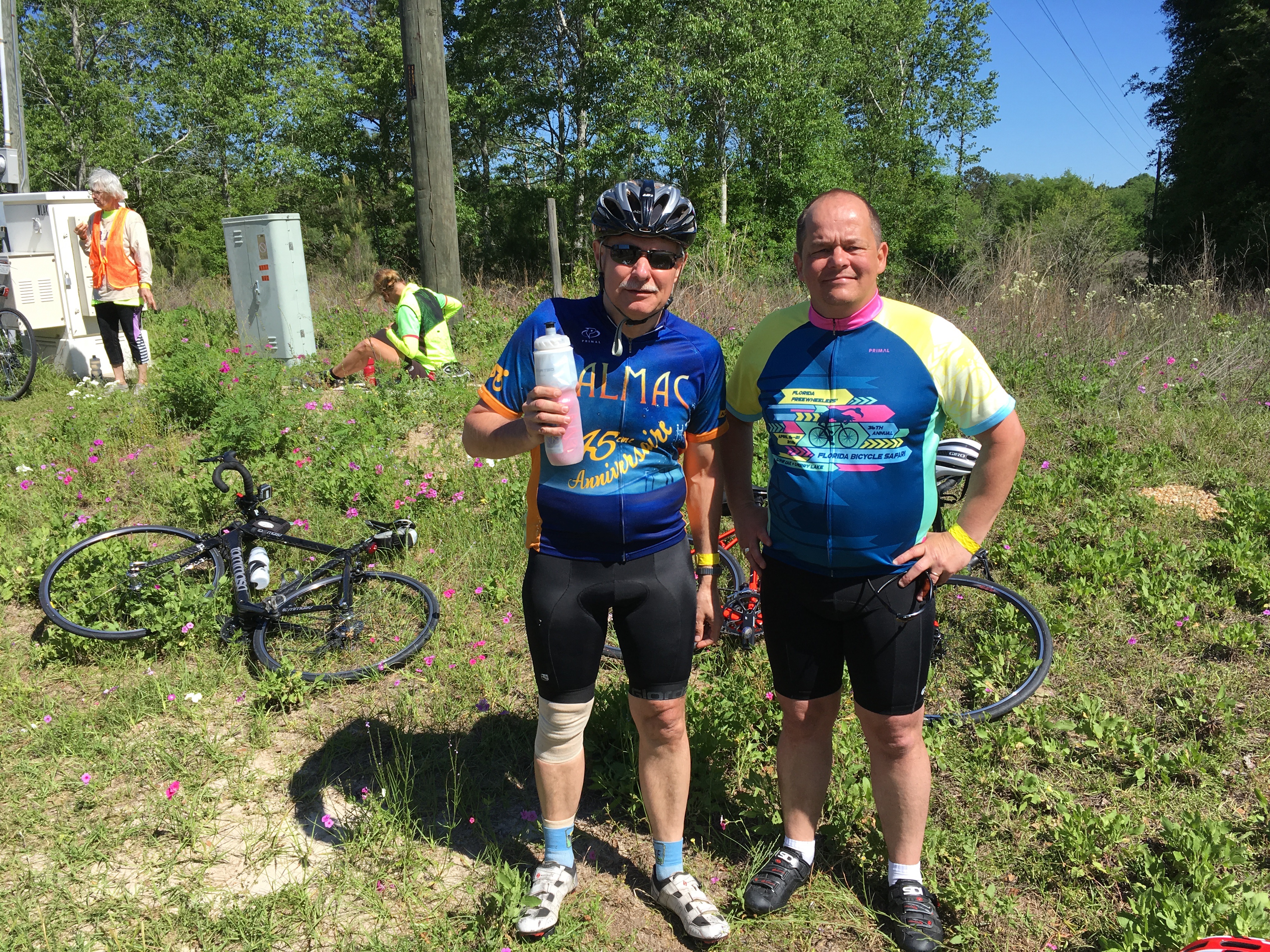
Day 3 – Ron and John, headed for Cherry Lake.

FS_05

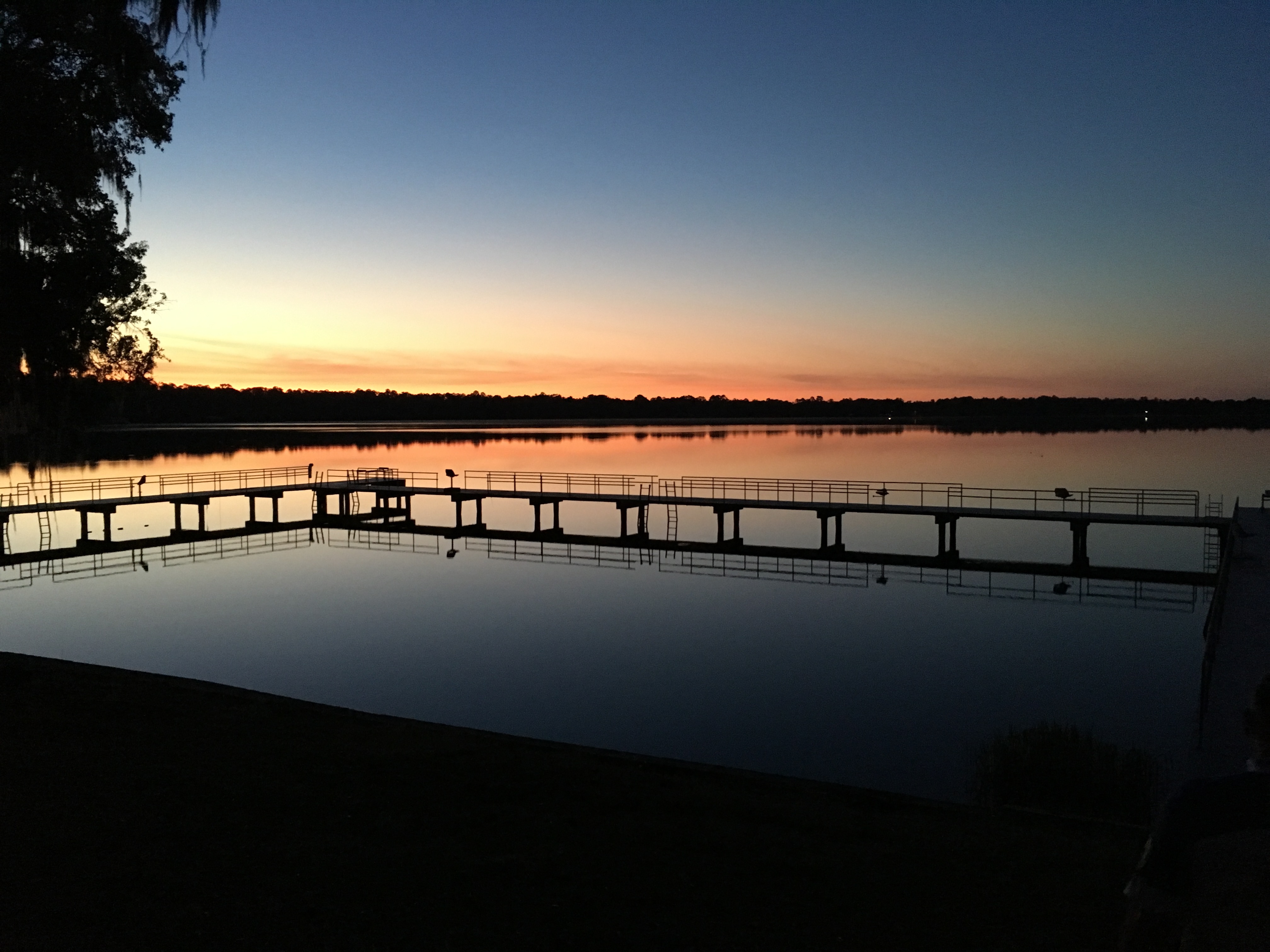
Sunrise over Cherry Lake.

FS_06

Day 5 – Post Ride!

FS_07

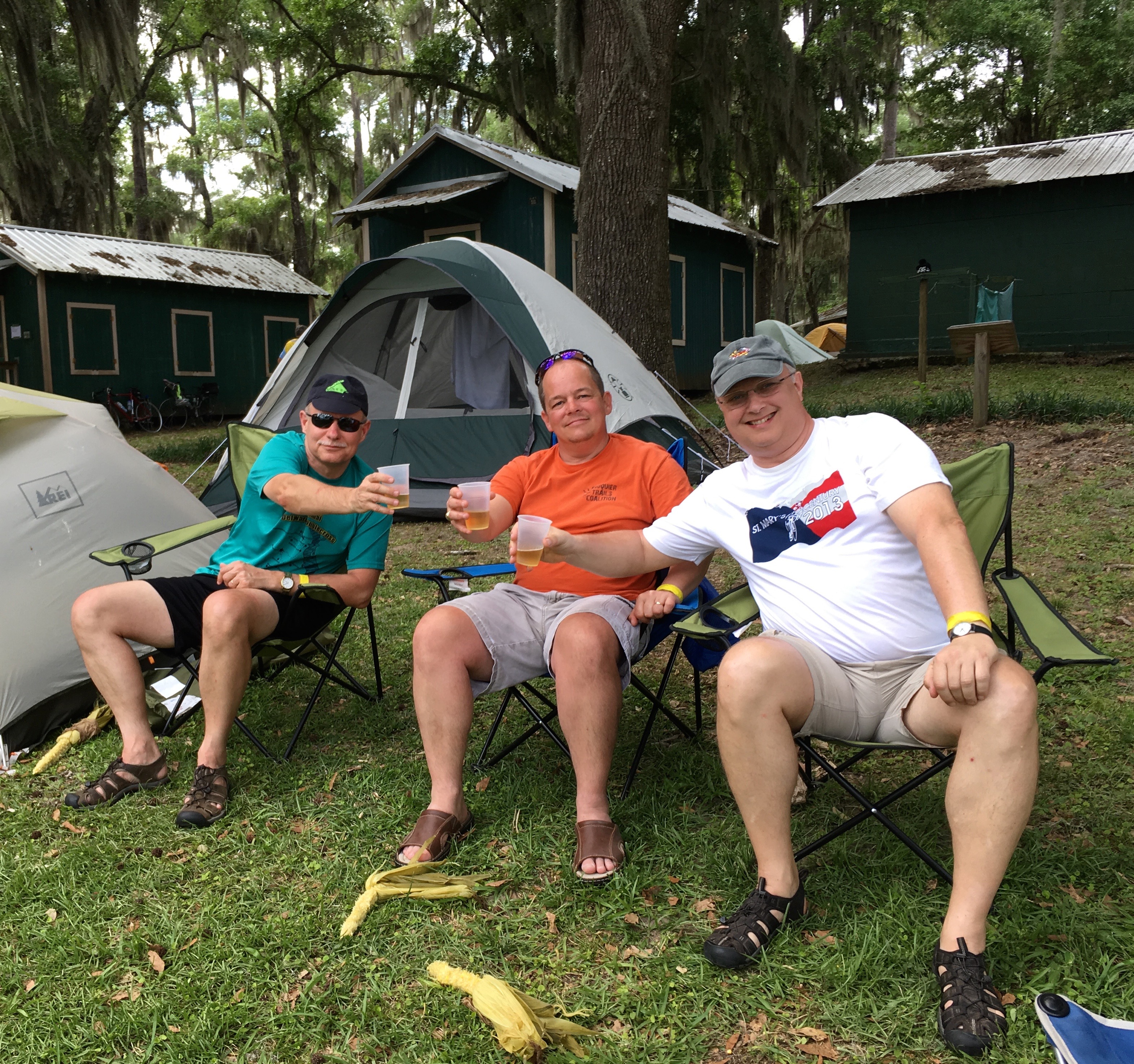
Day 5 – Celebrating.  Note the corncobs – riders do not live on beer alone…


Cycling through a warm autumn, and dreaming of spring.

It’s mid December, and yesterday I got in another 50+ mile ride. It’s not unusual to get in a December ride, but having the weather to allow longer rides is unusual. Of course whenever the high temperature goes below 40 degrees, it’s very hard to ride any serious distances, and since it’s getting dark and cold about the time I leave work, getting weekday rides in is also very hard. Yet this year I’ve managed to get through November and into December while riding good distances on the weekends with my cycling friends. I see no benefit to climate change, but while the daytime high temperature on Saturday hovered around 70 degrees, it was too good a day to waste indoors.

Every December, my friend Ron wraps himself up, gets on the bike, and cycles over 25 miles from his home to Mount Vernon, where he picks up the latest christmas tree ornament from George Washington’s estate. The round trip is over 50 miles, and usually cold. Not so today, so in the holiday spirit, 5 of us joined him on the ride. Eric, Rita, Tony, Matt and I made it an adventure, including stops for coffee in Old Town Alexandria, and Lunch at Mr. Smith’s in Georgetown under the Whitehurst Freeway by the Potomac waterfront.

Ornament

This was among the best of times, because we had the perfect combination of social and unhurried riding, perfect weather, and a goal at our destination.  Every bike ride is different. Some are fast and competitive, some are challenging, and some are explorations, but this was simply what I call a ride for the soul. No pressure, nobody gets dropped. Everyone just enjoys the company and rides for the pure enjoyment of moving and sharing the day with others. This autumn has been full of such rides. Fall riding is usually dominated by the scenery and complicated by the chill, but they also tend to have the unhurried flavor of riding for the sake of enjoyment.  Usually in the fall you’re in fairly good condition coming out of a busy summer and having made the most of your event rides in September and early October.  Some riders hang up their bikes at this time of year, but if you can get the right clothes and some friends to join you, these can be memorable times to ride.

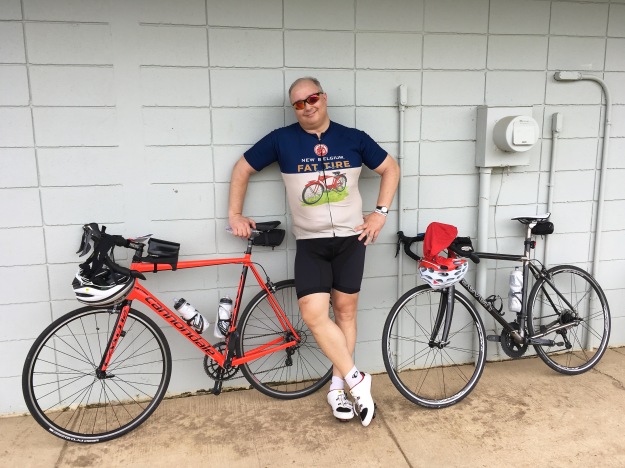
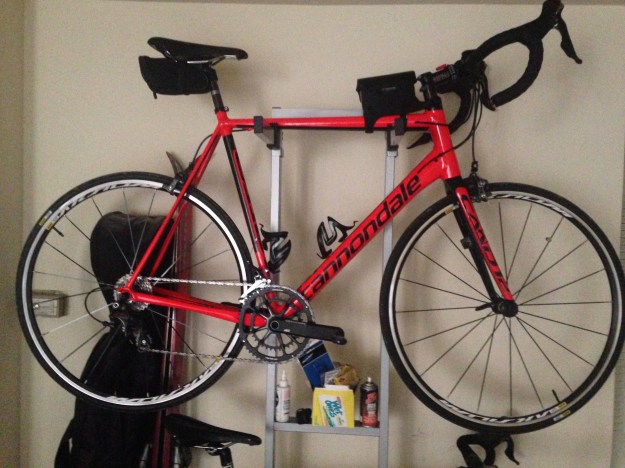
One of the reasons I’m enjoying this time stems from an impulse buy I made back in September. It’s a Cannondale CAAD 12 bicycle.  The color was unexpectedly bright, and since it’s a day glow color as if it was radioactive, it named itself – “The Nuke”.  This is an aluminum framed bicycle, but it weighs the same or perhaps slightly less than the red Orbea Onix bicycle you’ll see pictured in many of my past posts. I’d been enjoying the Orbea since 2010, and when I ordered the CAAD 12 it was just to get a bicycle that was different in fit and feel, which would also allow me to customize the Orbea to be geared for hill climbing. While aluminum bicycles are often taken to be hard riding frames, this one is surprisingly comfortable.  Experimentation with Carbon Fiber frames has allowed designers to make custom tube shapes that actually make an aluminum bicycle much more comfortable, and given that I ride the Cannondale with a slightly wider tire (23 mm to 25 mm) at a slightly lower pressure than before, it does tend to smooth out any differences I might have felt between the frame types.  The CAAD 12 has a mid range double crankset (52/36) Shimano Ultegra components, including brakes, and internal cable routing. All for much less than a similar carbon fiber framed bike.  A carbon bike at the price point I bought the CAAD 12 at would have lesser components, and I think that it’s an incredible value for the price.  Now that I have several hundred miles on it in a variety of conditions including steep climbs, I can report that the bike is a worthy competitor for a carbon bike at that price point. It’s quick, responsive and smooth, and I think it is great for an enthusiast as well as a racer. In any event, I’m really enjoying the bike.

CAAD12

Even though it’s unusually warm as I write this, it’s still December. That means it’s time to look ahead to events in the spring.  This is the best time to sign up for spring events, when the price is lowest. So far I’ve signed up for my usual first century of the year, the 6 Pillars Century, and a challenge ride – Storming of Thunder Ridge.  Usually, these are cold days and signing up for rides helps you dream of spring – but on a day that feels like spring, they’re a different kind of inspiration.  While I’m riding on these weekends, I’m not only thinking ahead, I’m enjoying my rides as I do.  It doesn’t get any better.  It won’t stay warm for long, but while I’m riding and signing up for spring rides, I feel a lot more connected to the bike than I normally do this time of year. I’m hoping for a short winter!

Cancelled due to Hurricane

Normally, I ride the Seagull Century on the first weekend of October. It was my first century ride, back in 2006, and I ride it because of the experience, with so many riders in one place it becomes a critical mass of cycling culture. I enjoy the work break that Seagull weekend provides me.  This year (2015) for the first time, the Seagull Century was cancelled – due to the approach of Hurricane Joaquin.

I know quite a few riders who don’t like the crowds of riders at the Seagull. Some find the course to be too flat. These are valid criticisms. In fact, the Seagull gets a lot of first time century riders, and a lot of charity riders end up riding the Seagull because it is a flat century, and that would suggest that it’s easier than a rolling course. I think it just provides a different set of problems, including fatigue due to unchanging riding position. Hills actually help sometimes. This ride tends to be crowded with riders who don’t know not to ride 4 across on the road, who don’t know how to draft others, or simply don’t understand that there is an art to riding in groups which they don’t know.  This is all true.

Yet the ride has a kind of charm that other rides don’t have. Perhaps it’s the time the ride happens – late in the season. Perhaps it’s the sheer number of riders, and the enthusiasm that seems to hang in the air, or the feeling of celebration at the finish with the music and refreshments, and the feeling you get when you realize that as autumn marches on and events become less common, it feels like a celebration of all the miles ridden to get to that point.

Now I’m sitting at home, watching the rain fall.
I don’t need to ride the Seagull. I like to ride it. There are reasons not to ride the Seagull Century.  There are reasons to try other rides that weekend, if only to avoid the crowds.  All of the arguments against riding the Seagull are valid for a lot of experienced riders,  but I think that for myself, none of them really matter.  When the ride was cancelled, it left a little void. There will always be next year.  For this year, I have to watch the rain fall and dream of dryer days!

Maine Lighthouse Ride 2015

Today’s ride: The Maine Lighthouse Ride is run by the Eastern Trail Alliance in Southern Maine. The ride starts in South Portland at Southern Maine Community College overlooking Casco Bay, and runs through towns such as Old Orchard Beach, Saco and Kennebunkport. The ride goes past several lighthouses along the southern Maine coast. This ride was listed as one of the the most scenic centuries by Active.com, and it lives up to it’s  reputation.  The ride is limited to 1200 participants, and it fills up every year. Riders have to sign up early. This is a very well organized ride. The Maine Lighthouse Ride includes some multi-use trails at the start of the ride which have a limited capacity, so some crowding will happen at the start. It also includes a section of gravel causeway over the Scarborough marsh south of Portland, but this shouldn’t be a threat to road bike tires if you ride carefully.  However, I recommend that you be sure that your tires are in good condition before the ride.

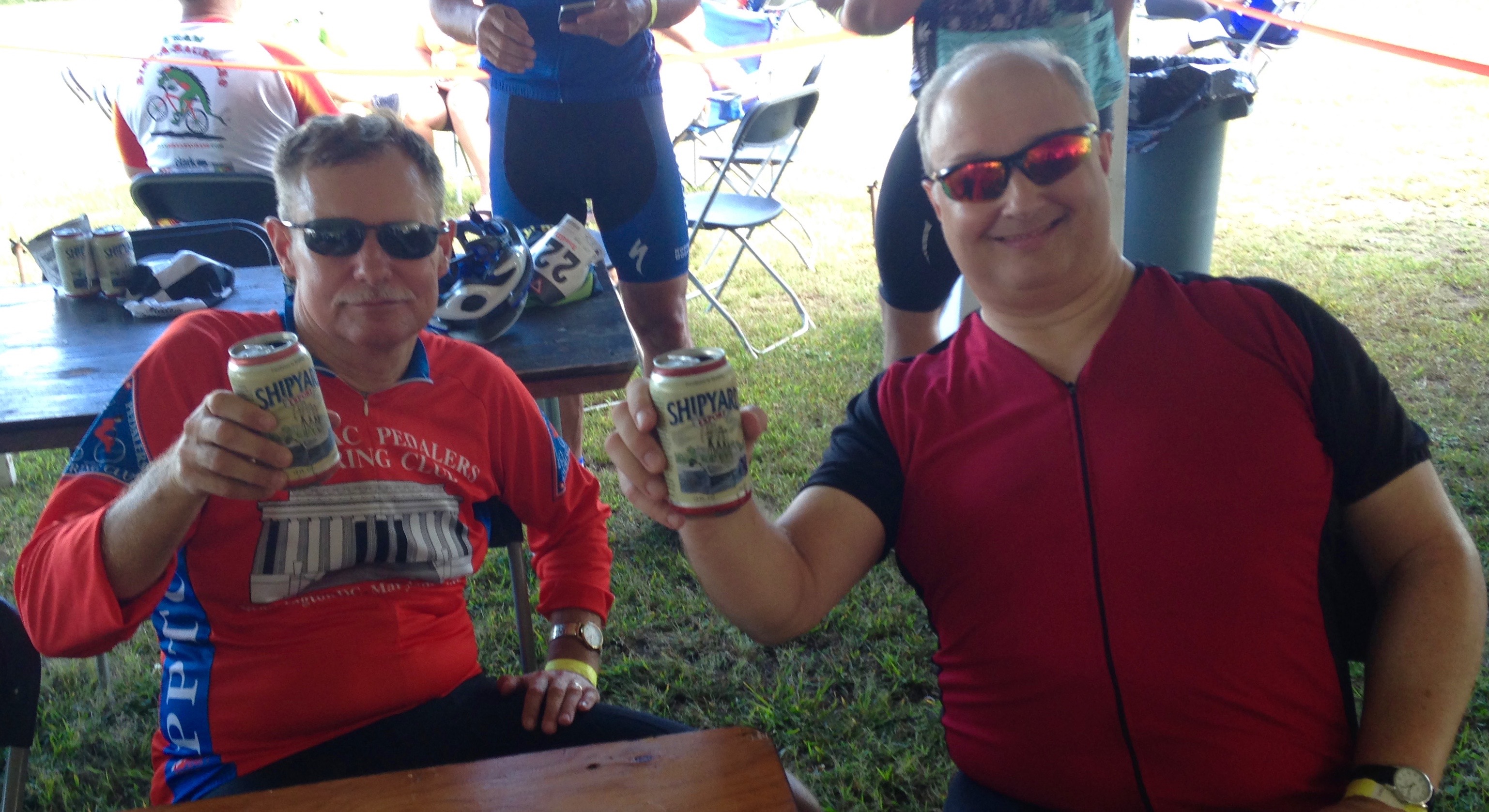
The Experience: This year I resolved to leave the Washington DC area for at least one ride, and I liked the description of the Lighthouse Ride, so I convinced my friend Ron, who is always up for a new bike ride, to join me. The weather was wet on the drive north, but the day before the ride cleared up quickly. Saturday turned out to be a picture postcard day – temperatures in the mid 70s, light winds, and clear skies. The ride has a mass start, and the first two lighthouses on the ride were right at the start, so there was some crowding to start. Among the riders were 68 riders of all skill levels from Iowa, who were riding for charity. While charity riders are often inexperienced and sometimes get in the way, this group was careful, and on the bike path in Portland they picked up my habit of calling out when we were slowing or stopping at crossings. It wasn’t long before Ron and I found our way onto open roads and picked up some speed.  The Scarborough marsh causeway challenged us, and while many riders didn’t adjust for it,  Ron and I rode it carefully.  There were a few riders who had a flat, but we reached the short climb after the marsh safely, and picked up the pace to get some separation from the bulk of the other riders before the first rest stop. After the first rest stop we had left most of the other riders behind us. We headed south over good roads toward Kennebunkport. after the second stop, (and a brief halt in Kennebunkport), we headed back north along the coast.  The road twisted and turned along the rocky coastline, and even without the lighthouses the ride was interesting, varied and challenging. The ride was flying by. We went back over the Scarborough marsh causeway, and I was concerned about a flat, but thankfully we didn’t have any problems. Near the end of the course we went through a park with a short, steep climb – but we came over the top to the final lighthouse of the day, the Portland Head light, and a great photo opportunity.  We rode back to the start and right to the beer garden, where we celebrated with local Shipyard ales. We were told that the ride had over 3000 feet of climbing, but the climbs were short and I thought we’d only climbed half as much as we did. I think the 2015 Lighthouse Ride was among the best if not the very best century I’ve ridden.  It was a feast for the eyes, the terrain was interesting, and of course conditions were perfect. It’s the kind of ride I’d go to every year, even if the conditions were rainy or hot. Some rides are going to be memorable no matter what the conditions will be. The Lighthouse Ride made a very positive impression.

Selections from my mental iPod during the ride: “Just Like Heaven” by The Cure, “Cynical Girl” by Marshall Crenshaw, and “Cliffs of Dover”, an instrumental by Guitar Hero Eric Johnson.

Statistics: 102.24 Miles on a perfect day, coupled with a great course and scenery to match.

IMG_0297

Ron at the “Bug” light in Portland Harbor.

IMG_0305

Cape Elizabeth Light.

IMG_0311

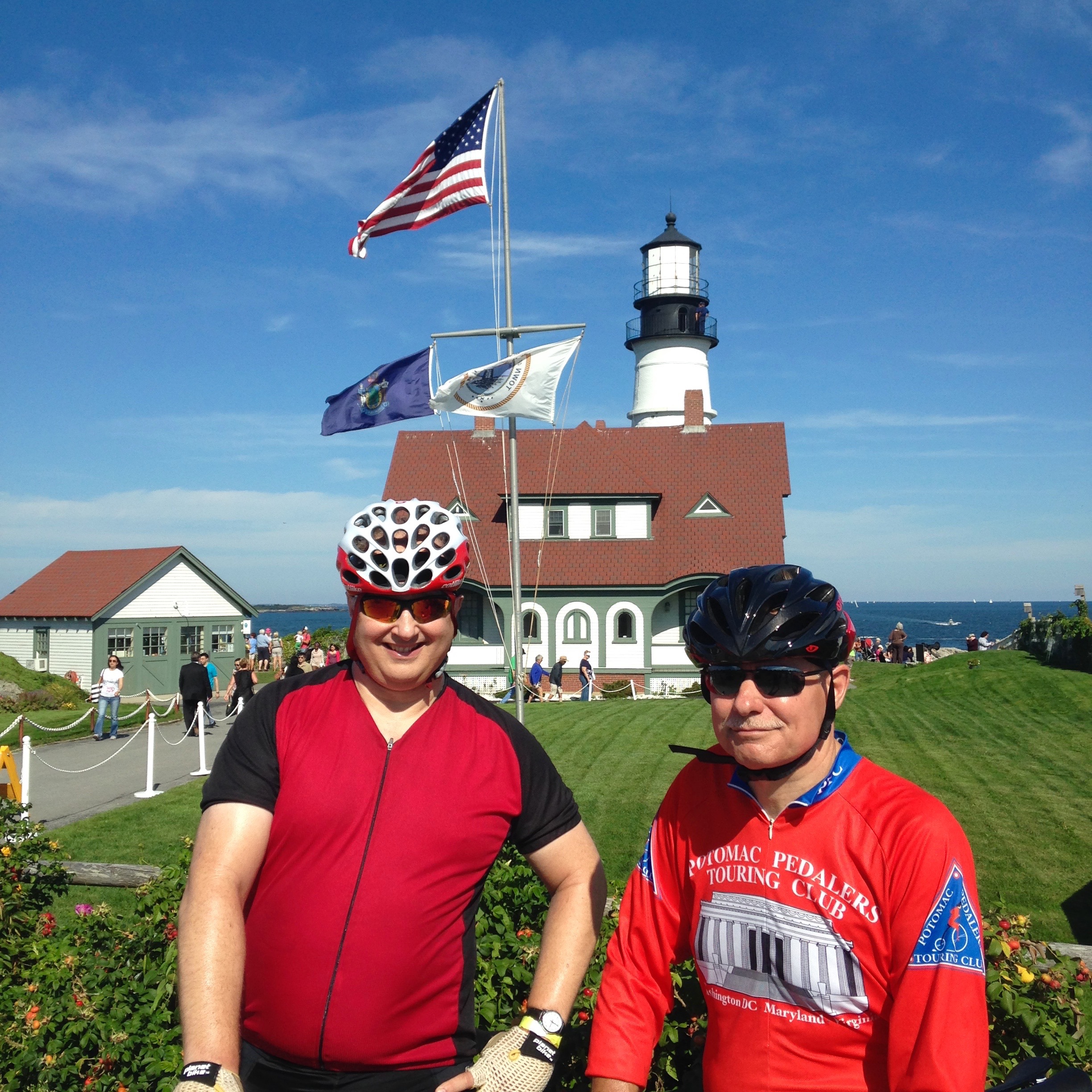
Portland Head Light.

IMG_0315

The two of us at Portland Head Light.

IMG_0317

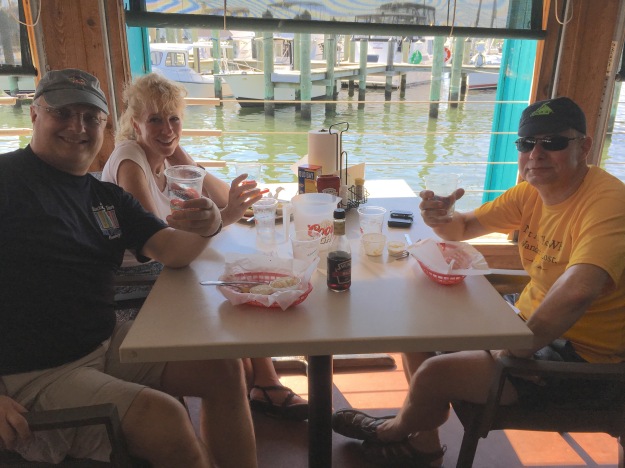
At the Beer Garden after the ride, celebrating with the local ales!

Indian Head 100 2015

Today’s ride: The Indian Head 100 has been one of my favorite rides since I first discovered it. This is the kind of ride that has something for everyone – the rolling terrain is challenging but not punishing, the course is often shaded and shows the best of Southern Maryland scenery, including the Indian Head Rail Trail that brings you back to the finish. This ride is organized by the Oxon Hill Bicycle Club, and their expertise shows.  This is a rider’s ride, and it includes some of the best rest stop food ever – breakfast at the first rest stop is legendary! There is a lot to recommend at this ride – I’m told even the shorter routes are excellent, and year after year this ride has always been a highlight. 

The Experience: I’m always eager to ride the Indian Head 100, and this year I was in such a rush to get there that I forgot my telephone. This meant that my photos would have to come from friends, and I’d have to feel foolish and forgetful for a while.  The day started with promise though. Despite my lack of communications tech, I met up with friends and started before the day began to heat up. Due to injuries and travel, many of my usual ride partners were not available, but my team has a lot of great riders, and none of us ever have to ride alone if we don’t want to. One of the riders who was parked nearby was riding a classic Lugged Steel bike that I couldn’t help admiring, but despite the distractions, I rode out into the promising morning with Tony Lehr, Carol Linden and a friend of Carol’s – Julie Marders. I was feeling good in the first section of the ride; I spent some time on the front, and we collected some other riders who liked our pace. Since everyone was riding responsibly, I wasn’t concerned. The first rest stop appeared before we knew it, and we all enjoyed the fabulous breakfast that the Indian Head 100 is famous for. I was surprised to discover that changes to the route in the second leg took away some of Riverside Road, which had been a 10 mile series of rollers that resembled a sine wave, but the route compensated for it by sending us over scenic roads that eventually joined Riverside farther down, and I was still treated to many of the rollers, which still left me satisfied. I was riding well through that section, and Tony, who had been getting stronger as the day went on, took over.  The group was split a little by the third stop, but we took full advantage of the rest, and I ran into my friend Judy and her son, and we took a moment to admire his new bike before we moved on. The next section found me suffering a little, as our group strung out I was still riding well, but the rest stop at St. Ignatius Church was welcome! This year, instead of offering the century riders a hard climb on Bumpy Oak Road, all the courses turned onto the Rail Trail to go back to the start. Carol was working hard on the trail, sensing the finish, but neither I nor anyone else had the energy to take over the pace making, so we relaxed a little and came to the finish tired but happy, as another good Indian Head 100 went into the books.  We all came together after the finish to celebrate and swap stories, and looked forward to the next chance to ride together. 

Selections from my mental iPod during the ride: “I love you Suzanne” by Lou Reed,  “What’s So Funny ‘Bout Peace Love and Understanding” by Elvis Costello, and “Eastern Bloc” by Thomas Dolby. 

Stats: 100.53 Miles ridden.  The course changes were interesting, and the ride satisfied as always!

Group

Our group the first Rest Stop. Left to right – Myself, Carol, Tony and Julie.

Resting

Post Ride, in the shade, recovery drink in hand.  We all live for this, don’t we?