Tag Archives: Seagull Century

Identity and Evolution

I’ve been working hard lately, riding my bike alone after work and generally trying to keep busy. Much of my cycling has been on my gravel bike. It’s a very comfortable and fun bike to ride. I’ve written about it here before. Mostly it feels DIFFERENT, and that’s what draws me to it. The road bike is still my friend, but I haven’t been training for any events this fall. Training for long rides is a very serious thing. It was much easier when I was riding lots of events from spring to late fall, and I had a group of friends to ride with and keep me motivated. That’s been changing too. Those friends have mostly moved on from the events if not my local area. It has become harder for me to commit the time and effort to solo training, and events can be expensive to sign up for and travel to attend. I’m still riding often, but this year it’s been shorter distances and slower speeds. Those 100 mile events that I used to be enthusiastic about started to wear on my body. That was my first clue that I had to evolve.

For the first time in 19 years the Seagull Century in Salisbury Maryland has been held without me. For a long time, I thought I would miss it, but yesterday the event went on, and I didn’t feel like I missed out. It felt more like I’ve moved on. I’ve ridden it 17 times, and most of the friends who rode with me during the best of those years stopped riding it long ago. A post on the Seagull Century Facebook group suggested that less than 2500 riders were there. When I started, there were 6000-8000 riders per year. Whatever the reason for the reduction in participation, it seems like the event has changed too, and that’s another reason for me to change with the times. I’ve been thinking of new ways to spend my time, and I’ll certainly write about some of them, but for the last 20 years or so a large part of my identity has been “hardcore cyclist”. It’s time I dropped the “hardcore” part, ride for the soul, choose different events for different reasons, and look for different activities and interests. Change is never easy, particularly not to a part of my identity that gave me good times and introduced me to so many excellent people. I have to find a good level of cycling to match my ambitions. Perhaps more than this year’s miles to keep a good fitness level, but no century rides. While I’ve loved riding them, in recent years they’ve started to take a toll on my body. I’m told that a tradition is an experiment that worked. This is true of century rides. The Seagull was an experiment that repaid me many times over for the effort to train for it and complete it. Yet both the event and my relation to it have evolved. As a dear friend asked, Am I going out of habit? Or does it serve a purpose? I think it didn’t serve me to continue. That isn’t a source of sadness, more an acknowledgment of my own evolution. I have good memories and feelings bound up in them, but they don’t serve a purpose for me as they once did.

Recently, I met with a group of friends who all share my love of good Scotch Whisky. My contribution to that meeting is pictured below. We’ve been meeting over good Whisky for many years. We’ve been doing it so long that we’ve refined our tastes. We tend to agree that we like single malts from the Islay region. I’ve found that just because a whisky is aged more doesn’t make it more interesting. Smoother, yes. But the enjoyment is often in the complexity and fullness of the taste. I like whisky that is 14-16 years old for a balance of smoothness and taste. While the Jura 18 is an excellent whisky, my friends and I agree that the Jura 16 is actually a little more interesting on the palate. Tastes change over time just as people do. I enjoy different whiskies as time goes on. Whisky is a complex subject. As you can likely guess, these whisky nights with friends (which include good food as well) are deeply enjoyable and memorable times. It struck me that evolution was happening all around me.
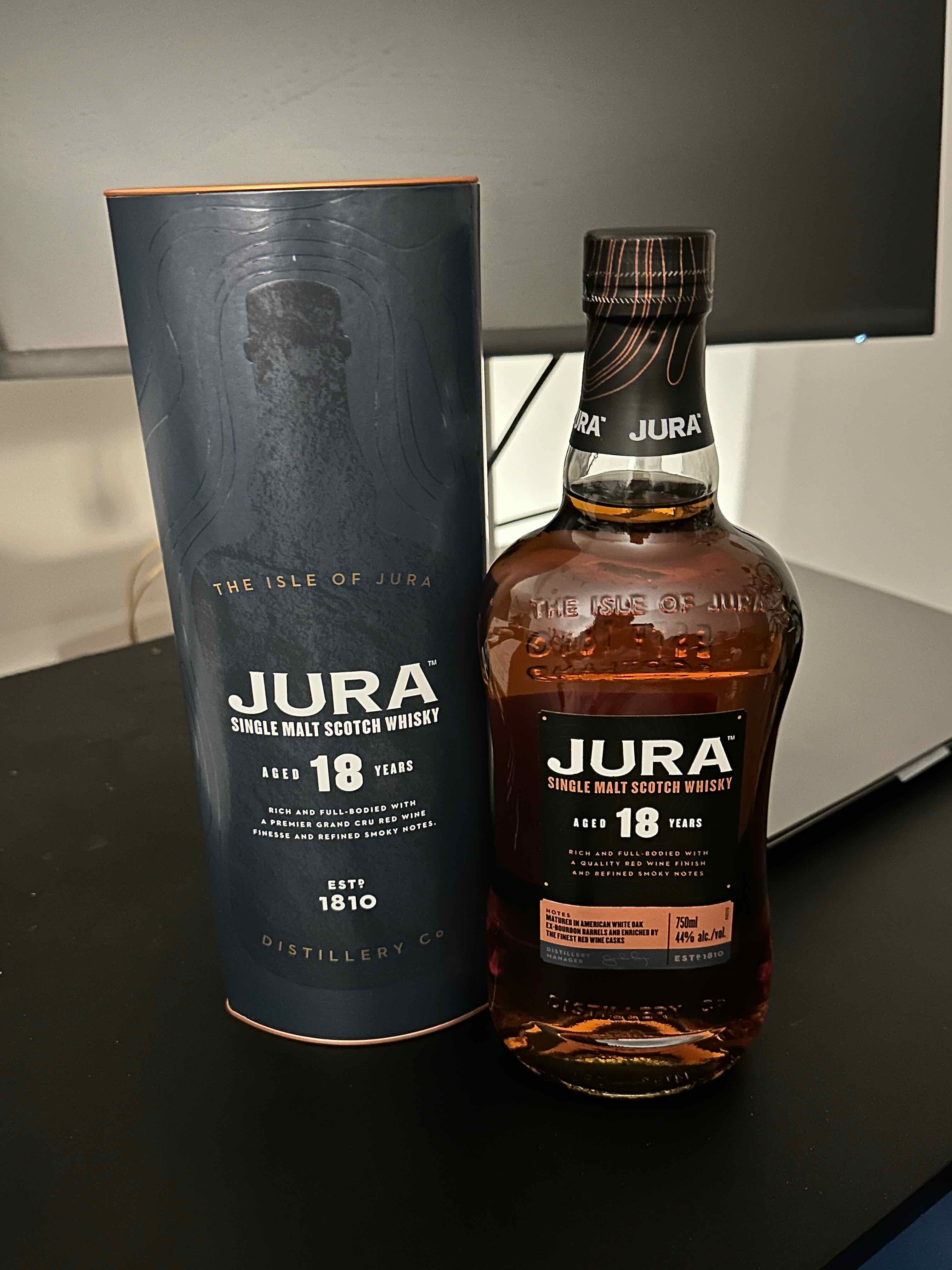
I’m a fan of good Scotch Whisky. This is an 18 year old single malt from the Isle of Jura Distillery that I shared with close friends. It’s very smooth with a rich, smoky flavor that makes Islay malts some of my favorites.

Among these whisky enthusiasts are some whom I once cycled events with. These are times to laugh, share, sift through old memories and even emotions, and let the whisky and camaraderie flow. When I talked of backing away from these events, I was greeted with “It’s about time” and “We all change”, but of course we also set up a short (20 mile) ride in a month or so starting and ending from a brew pub, so despite our advancing years we remain committed to maintaining some of our hobbies and habits, at least for now. The point is that we have all evolved. I am evolving, and it feels odd to have this part of my identity changing. I suppose that my awareness of the changes has caused me to put a lot of thought into what I will become. I have had time to reflect and discuss my desire to move on and explore other interests with close friends, and even through a whisky haze, it made perfect sense. As time goes on, I will write about these new lines of thought and new lines of interest as they come up. This has been a cycling blog for the most part, because cycling has taken up a good deal of my time, but as I evolve, this blog will evolve with me. Stay tuned.
Turning the Page

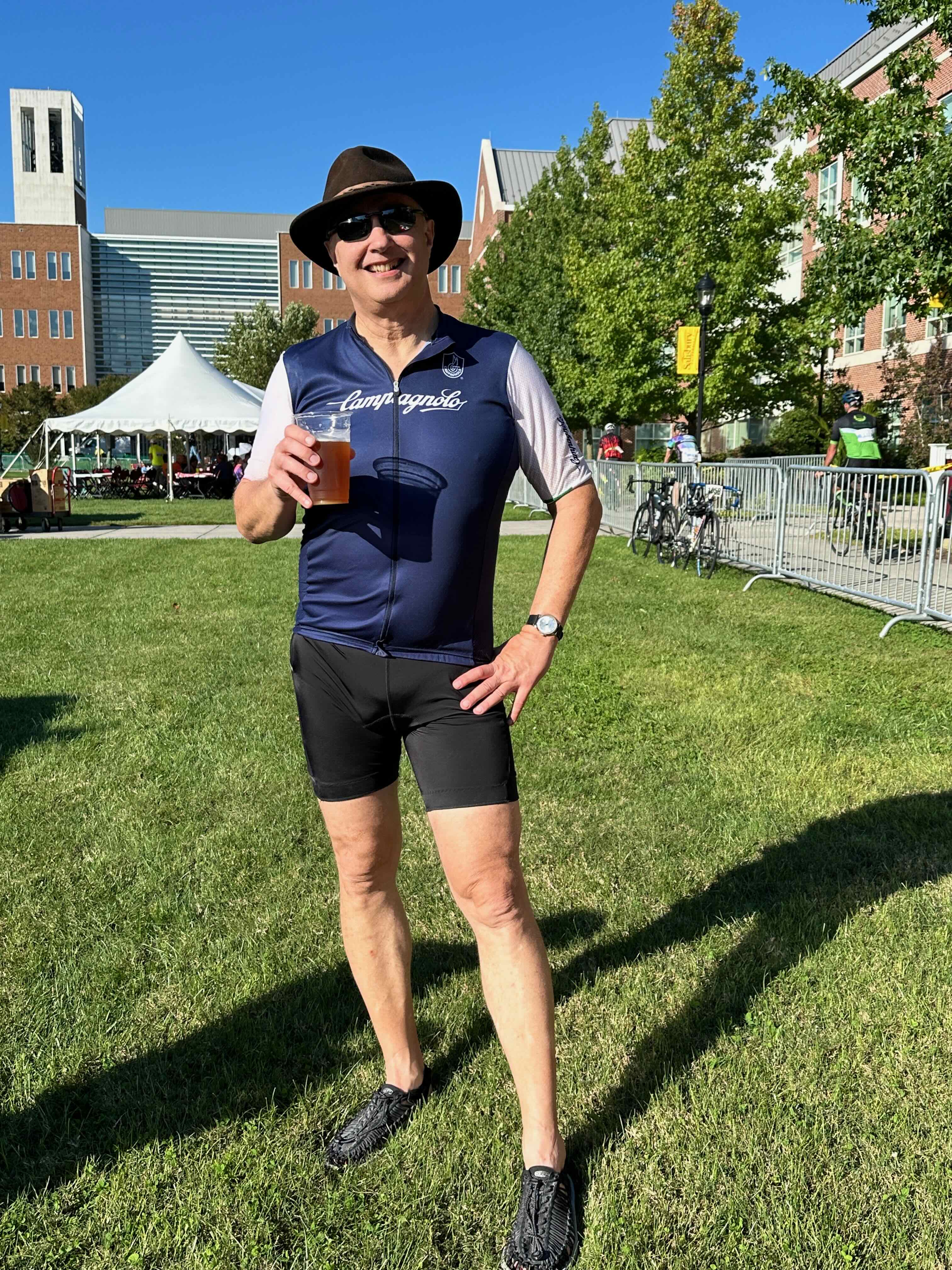
On September 28th, 2024 I rode my 17th Seagull Century. Barring some special circumstance, it will be my last century ride.

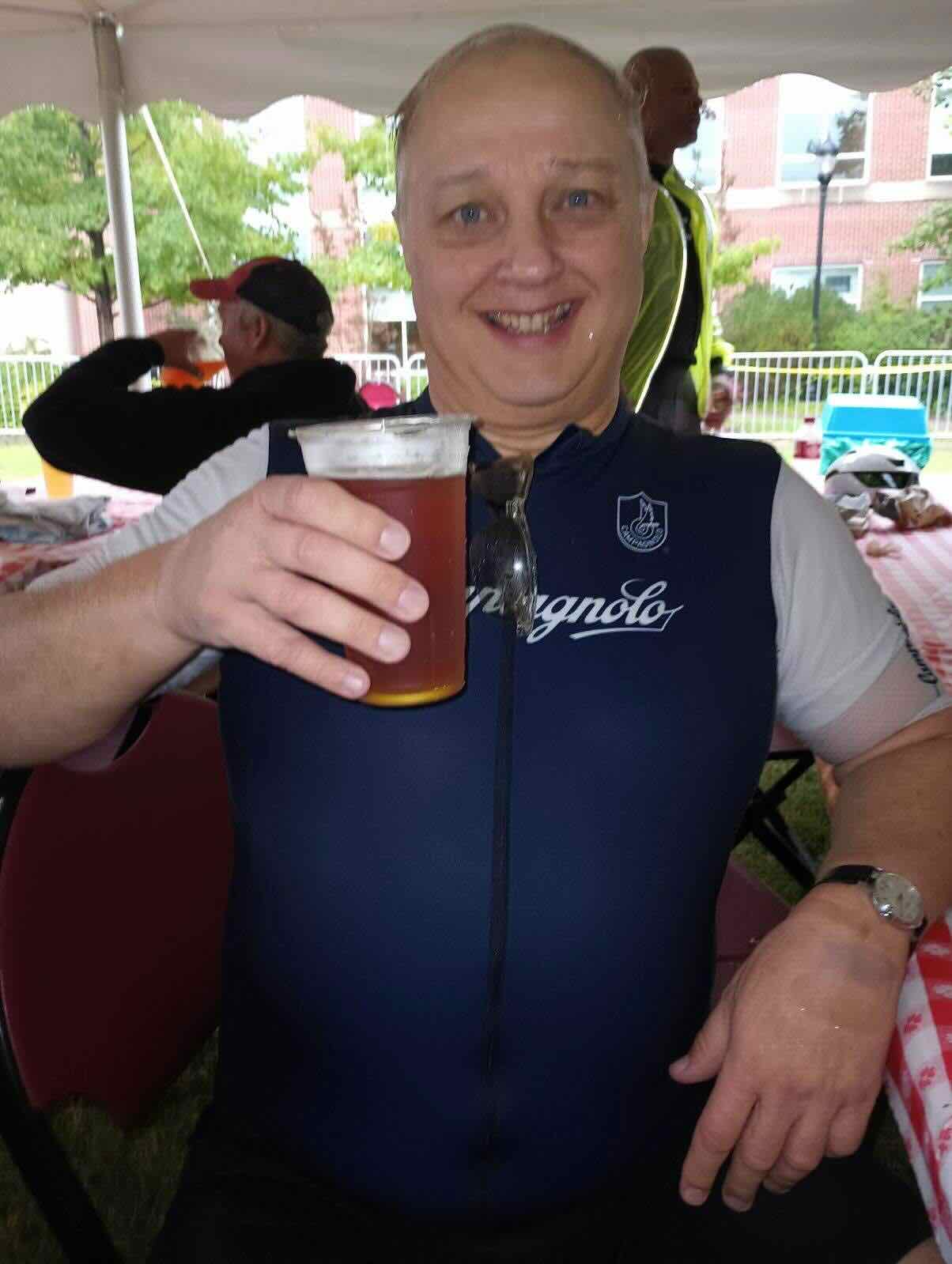
Enjoying a well earned beer after the 2024 Seagull Century

I began riding centuries at the 2006 Seagull Century at Salisbury University in Salisbury Maryland. Every year until now I’ve felt excited about the next year’s event. After 2023, I wasn’t entirely sure of my willingness to ride another. In the spring I felt better about it, and I signed up. However, through spring and summer and into the fall I realized that I had lost my taste for century training. Almost all of the friends who once rode that ride regularly no longer go to the event. I had given up riding other century rides, but this one was special. It was my favorite. I started there, and it was a challenge. Then it became social, and eventually it became a kind of personal tradition. I’ve ridden it 17 times over 19 years, with one not held because of hurricane Joachim and another because of the Covid 19 pandemic. I haven’t missed one in all that time, but I know now that for me, the time has come to turn the page and walk away. I have nothing to prove any more, and I don’t train as I once did. I have other things that I want to focus on, and while I still love to ride, I don’t need to take on huge efforts like a century to stay fit. Much as I loved riding them, and as many good memories as they’ve given me, I have begun to see riding centuries as a step too far for my cycling enjoyment. I want to ride for the soul rather than train for events. I’ll ride events, but I don’t want to suffer for them. I’m scaling back the distances I ride when I ride events now.

I have started to see rides from 30-40 miles as good days out, and metric centuries (62 miles) are still fun without being too hard on the body. The difference between 62 and 100 miles often depends on training and nutrition, but for the average person 62 miles is near the limit of both stored energy and energy easily gotten through eating and taking in electrolytes. You will feel tired (depending on how well trained you are) and you probably will feel fine the next day. 100 miles is a different animal. You may be trained well enough to shrug off a 100 mile ride without caring too much. There was a time when this was a good description of my cycling fitness. For the most part, 100 miles will test your legs to their limit. You will need to eat and drink during the ride to avoid the dreaded “bonk” where you run out of muscle nutrients and are forced to stop. It’s a test. There have been 4 times in the past when I’ve ridden “back to back” centuries, that is 100 miles on a Saturday and another 100 the next day. That was many years ago, and every time I was testing extreme exhaustion, and it took about a week to recover. Recovery from a century will typically take a day or two for the average rider with decent training. Age is also a factor, and needless to say, as I’m in my 60s and I’ve lost my training mojo, centuries are getting much tougher.

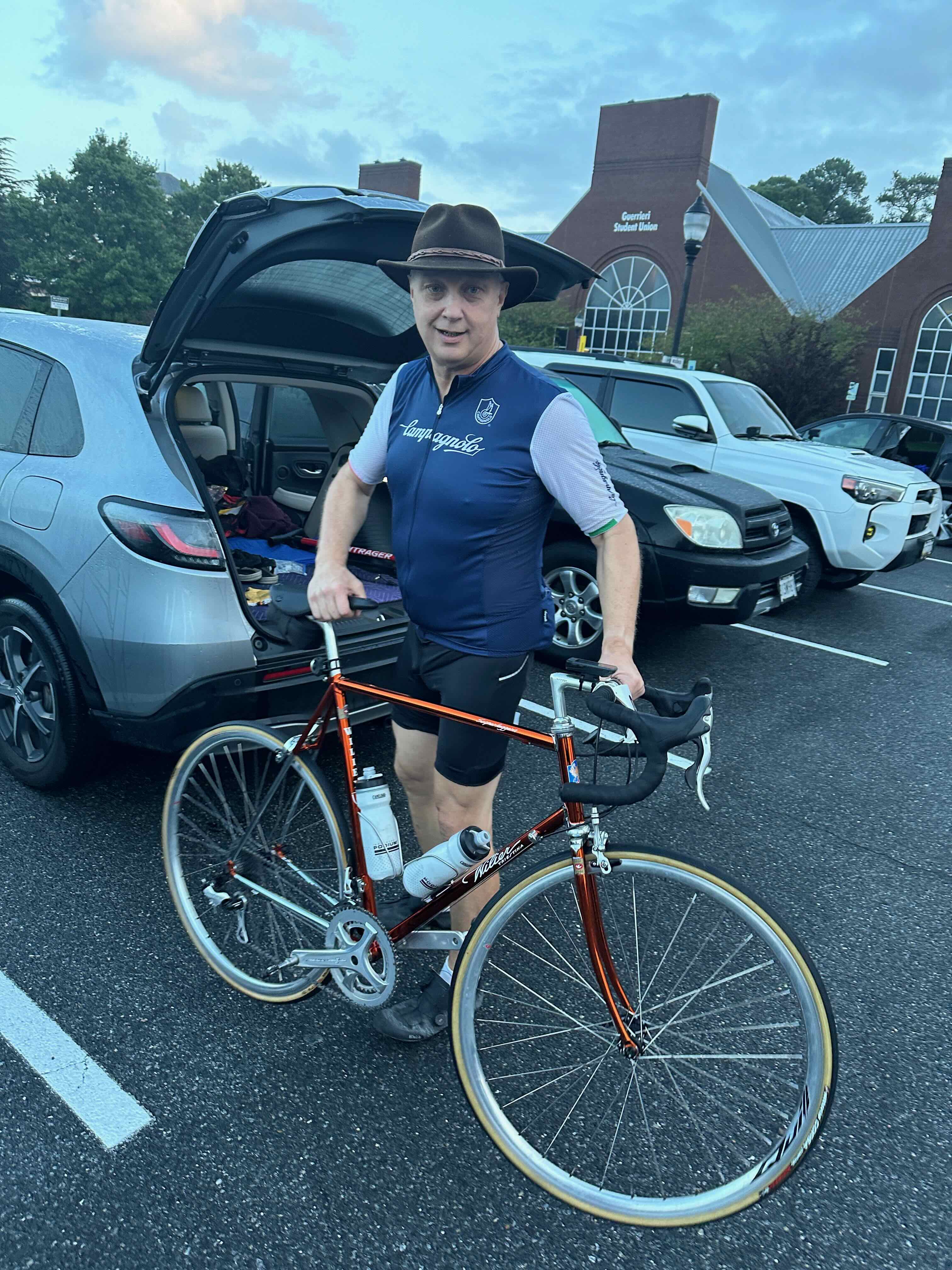
I knew going in that this Seagull would be my last, and I decided that it would be a success as long as I finished, and it wasn’t my slowest Seagull. I stuck to my personal traditions, and set out to make it a memorable ride. My steel Wilier Superleggera was ready to go. It seemed the perfect ride for the event. On a flat course and a warm and pleasant day like that Saturday, my Wilier is smooth and comfortable, and it suited my mood perfectly.

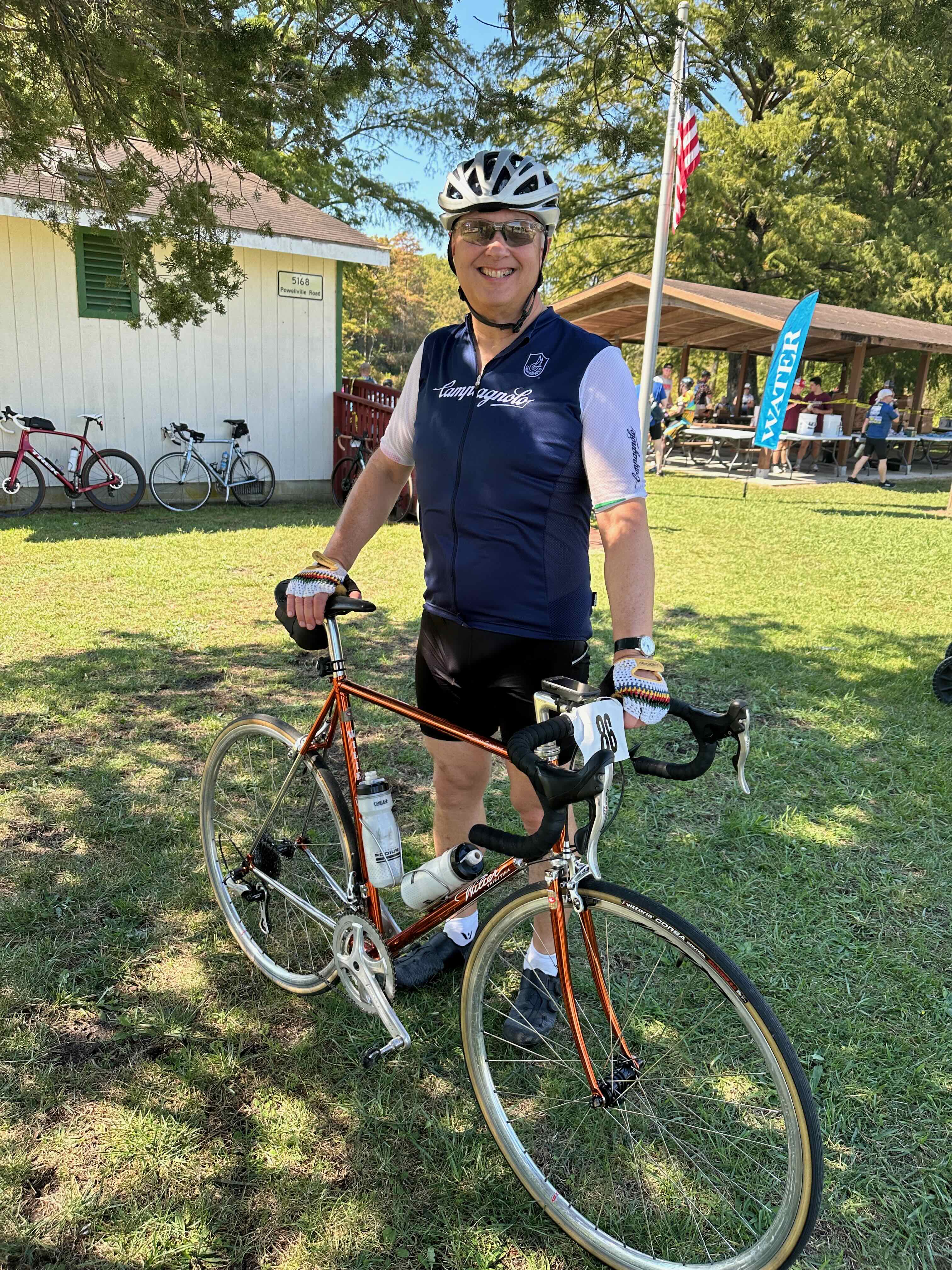
Almost ready to set out on the 2024 Seagull Century.

Starting out I was surprised at how FEW people were in the parking lot, in front of the gym, and particularly near the starting banner after going through the tunnel under Rte 13. So much has changed since I started riding this event! in past years, it would be crowded in these places. I started out about 7:15 in the morning and warmed up quickly. I was trying to hold a steady pace, but not necessarily a fast one. The point wasn’t to go fast, but to ride steady and finish with a time and pace that was at least averaging 16 mph. That would satisfy me at this point. I wasn’t expecting much, because my training wasn’t as good as it could have been. I had a lot of rides, but not a lot of long training rides. Still, I felt good and once I got warmed up, I was enjoying myself. The first two rest stops found me holding on to a faster pace than I expected. I knew that I would pay for that later, but holding on to a speed that was good when I was better trained was a hopeful thing. I had one point where a kid was drafting me for a couple of miles, and I asked him to pull through. I could have used a pull. “I’m just following you” he said. “I know!” I replied. He disappeared, being unwilling to give me a rest. Thanks, kid. Some people really don’t understand cycling etiquette. If you’re unwilling to return the favor, or you don’t have an agreement to be there, please don’t draft people!

On Assateague Island, 69 miles in. Getting there is a big part of the Seagull Century.

I reached Assateague Island as I began to feel fatigue. Had I stopped there I would have felt fine the next day. I could have bailed out then. Many riders apparently do. There are SAG wagons available. I ignored that possibility. I was going to finish the entire ride even if I had to crawl across the finish. I had been enjoying the ride so far, but I knew that I would have to slow down in the last 37 miles. I expected those to be difficult miles. I took a good rest before I set out again. By the time I reached Berlin on the way back I had begun to cramp up a little. Nothing major, but it was a concern. When I reached the final rest stop at mile 88, I needed a break, and I took a long one.

At the final rest stop, 88 miles in. Fatigued and cramping a bit, but enjoying the ride.

I knew that I had another 18 miles to go. I knew that I was beginning to cramp, so I did my best to stretch out, hydrate and fuel up for the final leg of the ride. It’s funny how you can suffer a little and still find it all so enjoyable. It was a good day to ride, and I was doing something I had enjoyed for years. Discomfort didn’t matter. The beer garden at the finish was calling to me, and I was listening. I got back out on the road.

The final leg was accentuated by leg cramps. Nothing severe, nothing to stop for, but I did find myself standing on the pedals to stretch from time to time. Yes, I could have trained better, but I knew I would finish. I took in the sights and smiled as familiar landmarks rolled by. I entered Salisbury with nobody nearby. I picked up the pace near the end, just because it felt right. I rode through the tunnel with a smile. I got to the finish line and pulled over feeling like I had nothing more in me. 106 miles, at 16.5 mph. Not great, but good enough. I went back to the car, stowed the bike, put on sensible footwear, and went back for pie and ice cream in the beer garden. Then a beer to celebrate. It was a good ending. I headed back to the hotel hot tub. I needed it. After the Seagull in 2022, I knew I wanted to come back. After 2023, I wasn’t sure. This year I am certain that this was my last century. I started riding centuries with a Seagull, and I ended with one. It was a perfect day.

I’m turning the page on century rides, but not cycling. Just rides over a metric century in length. We all have to grow, change and evolve as we age. It would take something special to get me to ride another century. This just feels right. I had a good century ride to end on, and I look forward to new and different challenges.

Rethinking a Personal Tradition

I’m the kind of person who likes to take on challenges, and I’m also the kind of person who creates traditions. I value consistency, but not when it comes at the expense of novelty. Last month I rode my 16th Seagull Century. When I first rode it, the Seagull was a challenge. I wanted to finish a century. Then I wanted to improve, then it became social, then it was something I did every year that had become traditional. This all happened because I was enjoying it and it helped motivate me. Previous entries in this blog show how much I have enjoyed this event.

On the Salisbury University Campus on Friday the 13th with the Salisbury Seagull.

In the last couple of years, I have begun to get less from the Seagull than I once did. I found that most of the familiar faces that I used to see there were absent. I have been riding it alone in recent years, pushing myself as an individual challenge to complete a goal. It occurred to me earlier this year that I just wasn’t getting as much out of this event as I put in. I decided to ride this year’s event and get all I could from the experience. Then I would take the time to evaluate my goals, and decide whether to continue to ride it every year.

The Seagull Century Information Desk

The 2023 Seagull would be a serious challenge. The forecast called for rain. This isn’t unusual, I’ve been rained on during the Seagull a few times. The Friday before was a glorious day, and the following Sunday was also nice. It just happened that the weather had stubbornly chosen that particular day to water us. As a result, I thought that there were fewer riders this year. The difference was pretty obvious. On a sunny day, this would have been a kind of rolling cycling festival. This year it was a more focused affair, with only the most committed riders on the course. There were a lot of us, but the sheer volume of 5000 or more riders wasn’t in evidence. I don’t know how many were riding this year, but I think two to three thousand would be a good guess.

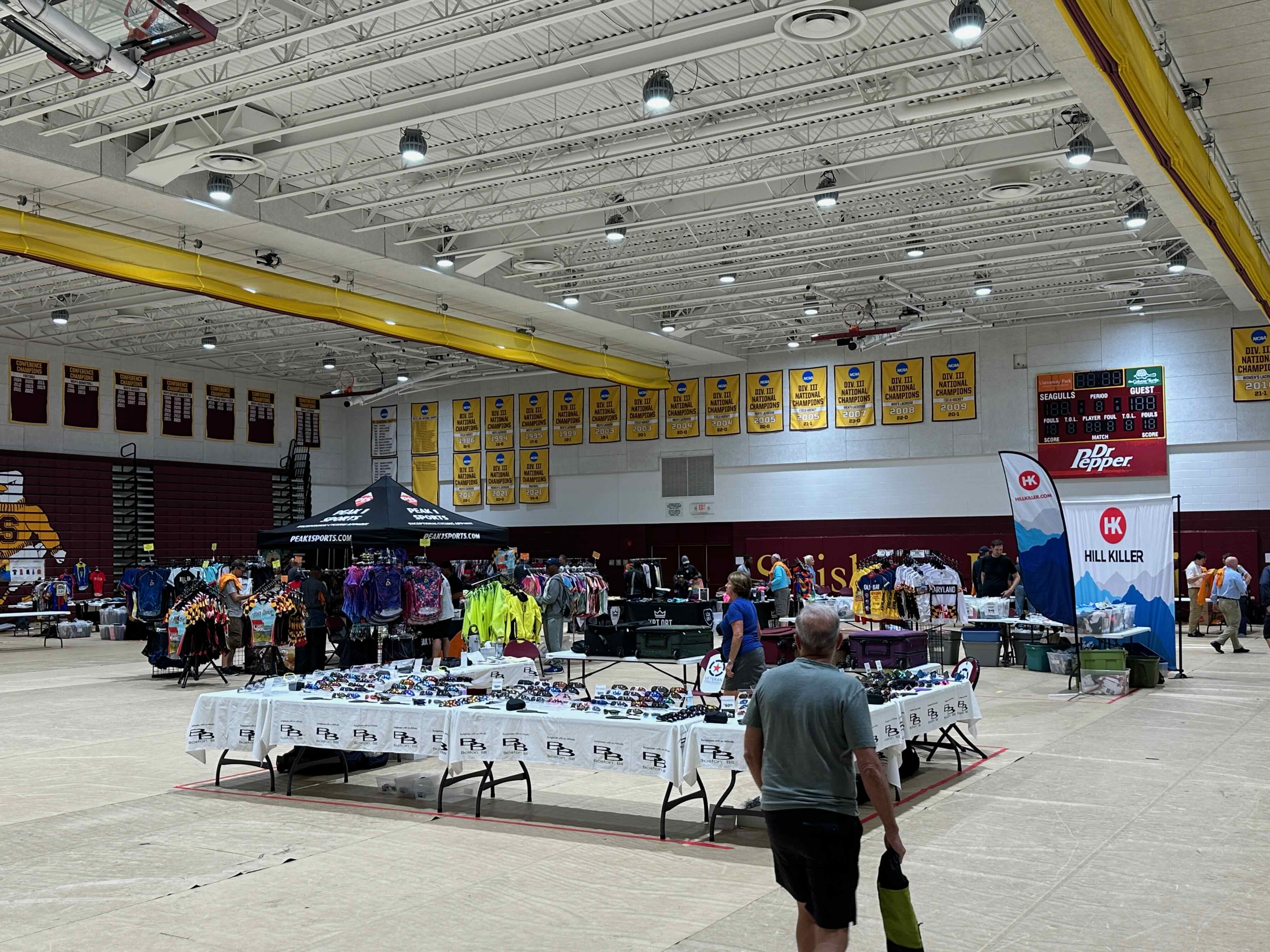
The vendors inside Maggs Gym.

I arrived Friday and went to campus to pick up a shirt, and of course I walked around the gym to see what was on offer. In all the years I’ve been riding the Seagull, I have never bought a Seagull jersey. This year’s was a good design, so I purchased one and picked it up at the gym. On Saturday morning I parked in the usual place, then I went to the “High Carb Breakfast” at the SU dining hall. It’s better than the typical Continental breakfast in most hotels. Afterward I prepared carefully and left for the tunnel and the ride start.

Ready to ride.

I let myself bask in nostalgia as I entered the tunnel, given my uncertain feeling about my future participation in this event, and as I approached the start banner it was dry and beautiful. Could such a nice start really end badly? I set myself a strong pace, understanding that I didn’t have time to waste if there was a chance that I could avoid the rain. I felt good and rode steadily. I remembered the years when I had last been on those same roads and seen those sights. It was fun. The first stop was brief. I had been drinking well and I’d emptied a bottle and a half. I refilled, ate a banana and snacks and headed out again as the light gray morning skies filled in and darkened.

The first rest stop. No rain yet!

My pace was steady, and others tried to pick up my wheel as I rode on – and at least one started breathing hard, then dropped off suddenly. The lesson – ride the pace you’ve trained at. This may be a flat ride, and drafting can save you energy, but you have to know yourself. This is a century ride, not a race. There is no prize to be had. I was having a good time. My second stop was a little longer, but I still felt good. I headed out for the next leg to Assateague feeling hopeful and dry. There were clearly fewer riders – fewer to pass and even fewer passing. I followed the road marks, but it wasn’t really difficult. I was having a good time. I arrived at Assateague (mile 68 this year) feeling confident. It was a gray day with the odd raindrop, but it hadn’t amounted to a drizzle for me, so I took my time and looked around. I headed back feeling strong.

The Verrazano Bridge to Assateague Island,
The beach entrance on Assateague Island.

My luck held out for another 7 miles, then at about 75 miles in the rain began. Not a light rain, but a steady soaking rain with no respite. I was heading west into it, and there was no choice but to endure it. I still looked at those familiar roads and smiled, but the Seagull Century is known for raining on riders every few years and this was expected. In fact, looking back on past years, I’m surprised at how often it’s been dry for me. The final stop was at mile 87, Adkins Mill Park. I found a dry place under the picnic shelter. I hadn’t been drinking much, so I ate, drank and refilled bottles. I felt so wet that I should have been approaching dry from the other end. The last leg would be the shortest. I set out to hold my pace and endure the rain. The other riders also seemed resigned to being wet and determined to finish. I thought it was interesting to see so many smiles among them. I was hanging on to that strong pace I started with. The cold and wet weather was working against me, but I was still going well. This would be the fastest Seagull I had ridden in years. Coming in to Salisbury I felt strangely lighthearted. I was alone when I went through the tunnel. The cheers were wonderful, if slightly less in volume than on dry years. In all, I rode 105.5 miles at an average of 17.6 mph. Not bad for a 62 year old man.

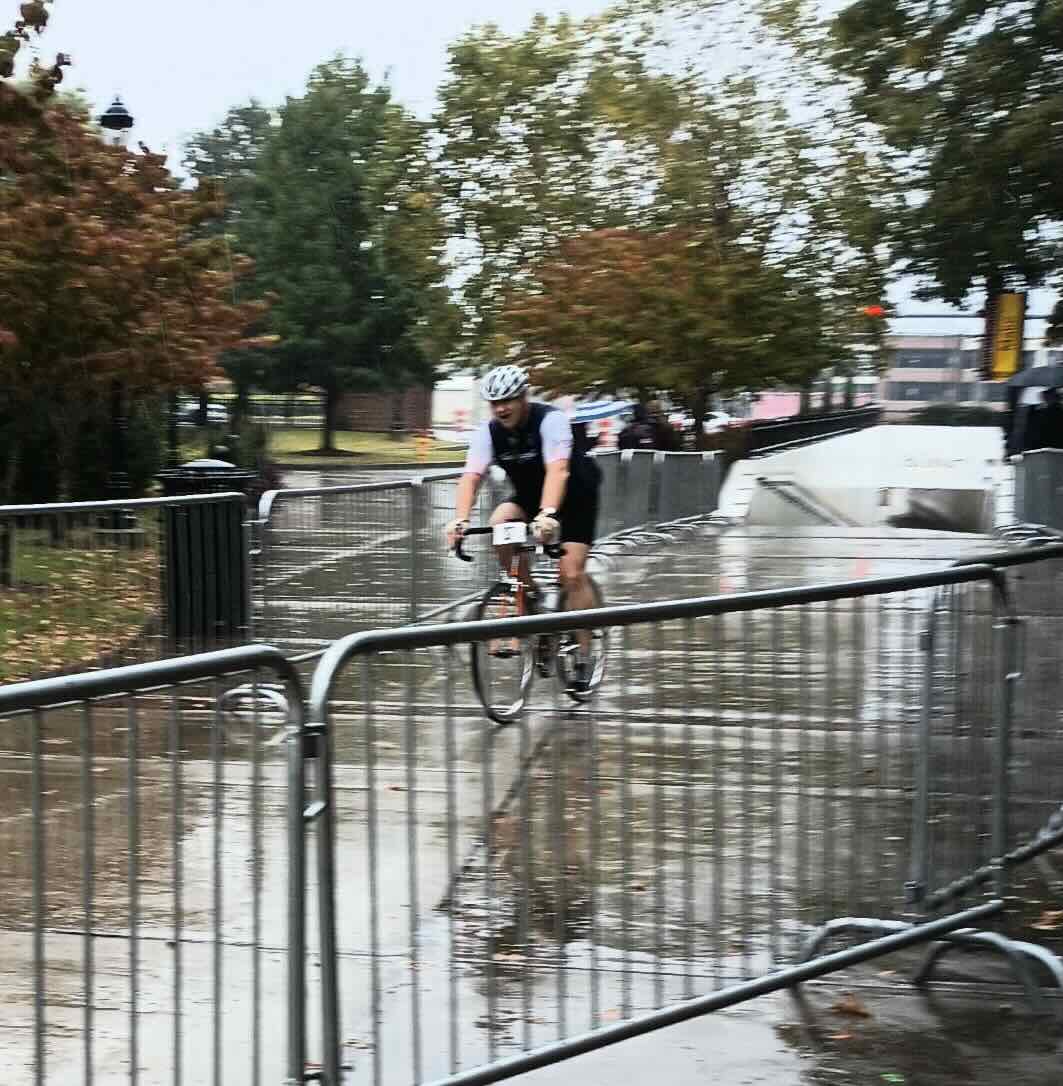
Coming out of the tunnel in the rain toward the finish.
Celebrating the completion of my 16th Seagull Century.

I was wet cold and exhausted when I got off the bike. Thankfully Dianne found me as I walked over to the beer garden and handed me a Pumpkin Spice Latte. It was wonderful. I might have been feeling the edge of hypothermia, and getting out of the rain and drinking that latte felt wonderful. I celebrated with a post ride beer, but I didn’t hang around long afterward because I was still very wet and very cold, and I needed to warm up. The hotel hot tub revived me. I had a nice dinner with Dianne and came home the next day feeling satisfied.

With the benefit of a few weeks to think it over, I may ride some different events next year. I don’t want to completely give up on Seagull at this time. I booked a hotel room when the date for 2024 was announced. I won’t hesitate to register if someone asks me to ride with them. If I’m still feeling ambivalent about it, I can cancel the hotel and move on without regret. I ride enough to be ready in case I change my mind. There have been times when I was excited to sign up and excited as the Seagull approached, but I think that as people whom I once shared that excitement with stopped riding it, I started to get less out of the ride. I’m keeping my options open, and I won’t make a decision until next summer. This is the first time since I started riding the Seagull Century that I haven’t been sure that I’ll be riding it again the next year. I’m going to feel fine no matter what I decide though.

Returning to the Seagull Century in 2021

The Seagull is a familiar event with many happy memories. But was I ready?

At the Seagull Century rest stop on Assateague Island, 10/9/2021. My bike got a lot of compliments!

I had been looking forward to riding the Seagull Century again since 2019, because the 2020 event was cancelled due to Covid-19. Since Covid remains a consideration, changes were promised for 2021 to make the event safer. For me, no virtual substitute could stand in for actually going there and riding with all the other riders. I have ridden the event for so many years that I wanted to ride it in person again regardless of the changes. There were quite a few differences, both obvious and subtle, not the least of which was a registration limit of 4000 riders. None of the changes concerned me, and even if it wasn’t exactly the same as I remembered, I felt good about riding it again. I was worried about how I would do. I was not sure that my training was good enough. I decided that my goal would be to ride faster than my slowest Seagull – which I thought would be easy enough.

The ride itself was very familiar. While Seagull is a flat century, and a very busy century, the Delmarva peninsula autumn scenery is part of the charm, as is going to Assateague Island. I started at a good pace, using a steady cadence and fighting against the wind as I headed east. Every familiar turn made me smile. I wasn’t sure that I could hold my pace this year – my training wasn’t as good as previous years, and the wind was challenging. However, I got to the first rest stop without feeling too tired. After fueling up and refilling my bottles I set out again, hoping that the winds wouldn’t wear me out too quickly, but they were pushing against me. When I got to the water stop in Newark, I immediately found a good spot to park my bike, and I did my best to make the stop as brief and effective as I could. The next leg to Assateague was very windy, and I had to power through stretches of it, but the familiar landmarks kept me focused, and my legs were still holding that strong cadence.

My anticipation grew as I approached the island. Over halfway done! Finally the bridge to Assateague came into view – and the only real climbing that day started. I had relatively little reason to shift gears before the bridge, but that climb was welcome! Over 60 miles done! Despite the mob scene at the stop, I did my best to get food and water quickly. I was satisfied with my pace. I was going much faster than I’d hoped. This stop is always a highlight on the Seagull Century. I did my best to savor the moment, and then I started back.

Now the wind was helping me, or at least not hindering me, and I got into a rhythm and started passing other riders. I wanted to finish strong and hold the pace I’d optimistically set at the start of the ride. I passed a lot of riders. I got through the town of Berlin at 70 miles hoping that I wouldn’t have to slow down too much. Every familiar turn raised my spirits and called up memories, and when I got to the final rest stop it wasn’t crowded. I took some time to rest and eat, thinking about the final leg. With less than 20 miles to go, I set out for Salisbury determined to finish strong. The day was getting brighter, and so was my mood. This old man was still riding strong! I didn’t let up until I reached the tunnel at the campus. I emerged to the wonderful sound of cheering from spectators and friends. I had ridden slightly faster than I had in 2019, averaging 17.5 mph. The beer garden was fabulous. Beer and friendship flowed as we cheered for the incoming riders. It felt wonderful, just as it had when I finished my first century at the Seagull in 2006. I haven’t missed a Seagull since.

A few final notes to share here: if I had a dollar for everyone who complimented my bike, it would have paid for the entire trip! It was nice to hear praise for my lugged steel bike. After the ride, the hotel hot tub felt like a little piece of heaven. Maybe I still have another Seagull or two left in me!

Looking Back, and Planning Ahead.

It’s mid-October and at this time of year I usually look back on my year and think about all the events that I’ve ridden. Not this year. I have ridden fewer miles than usual this year. All of the events I might have ridden if the pandemic had not cancelled them have past, and I’ve come to accept 2020 without events. Without something to train for, I changed my habits. While I enjoyed my rides, they felt different. I spent more time riding alone. I rode fewer miles, but my rides were more intense. I will need to adapt again. I have used Century events to plan out my year for well over a decade. This year was no gradual change – it was a shock. What do I do now? I thought I’d look back on my cycling history, and set some goals for 2021.

A rest stop at the Patuxent Rural Legacy Ride. Not a century, but a ride I love and don’t want to miss.

I’ll start with a little personal history. I began road cycling with my local club in 2005, after returning to Maryland from the Seattle area. I have ridden over 100 Century events since my first in 2006. For years I rode 10-12 centuries per year, most of them within a day’s drive of the Washington DC area. Rides like the Seagull Century, Indian Head 100, Backroads Century, Maine Lighthouse Ride, Bay to Bay, 6 Pillars Century and more have been part of my riding plans for years. I’ve written about all of them here in the past.

I have ridden over 11,000 miles in Century events alone. That doesn’t even consider other events that were less than 100 miles that I’ve ridden. I’ve spent a lot of money on entry fees, and a slice of that has gone to charities. Events have been good for my health. They have been good for my social life, and they have even done some good for others. I’m proud of that. I estimate that I have ridden over 36,000 miles since I took up road cycling in 2005. That’s 15 years of commitment to something that I look on as a hobby, which became a lifestyle and a passion. Cycling events have become part of my identity.

As a century rider I’m not unique. The fastest I’ve ever ridden 100 miles was just under 5 hours, averaging just over 20 miles per hour. I’ve only done that once, and while it felt good, I don’t think I will ride another 5 hour century. While I like to ride fast, I’m not a fast rider. I may be a strong rider, but I’m nothing special. Given my conditioning over the past 15 years, I’d say I’m a good rider for my age and size, but I’ll never be a racer. I climb well for a big man, and I enjoy rolling rides and climbs. I’ve ridden events from tabletop flat to mountainous. The average speed of my first century was 15.6 mph at the Seagull Century in 2006, a flat course. Last year I rode the Seagull averaging 17.4 mph – 13 years after the first one. The fastest I’ve ridden the Seagull was an 18.6 mph average speed. I was riding my fastest about 8-10 years ago. The speeds I’ve ridden have varied, but not wildly. I had to look up the speeds from my old training journals. As I get older, I expect my speed to go down. It’s a fact of life. I can’t compete with past efforts.

Whether you finish a century ride in 5 hours or 9 hours, you get the same prize – the satisfaction of having completed your ride. Centuries are challenges, not races. Another challenge I’ve done is riding two centuries back to back in a single weekend, Saturday and Sunday. I’ve done that 4 times. It will definitely make you feel run down the following Monday! I don’t need to do that again. Like the 5 hour century, It’s enough that I’ve done it at all. 2020 saw my club cancel group rides, and that was a problem for my motivation too. Club rides are excellent training and preparation. Assuming that club rides come back, 2021 may provide new friends and new groups to ride with. I’m definitely going back to club rides.

I’ve met a lot of people through cycling. Some are very close friends. Some have come and gone, some still hover at the edges of my cycling experiences, some will join me occasionally, and a few I won’t see again, and that makes me sad, but I’m proud to have known them. I’ve lost acquaintances and friends and drinking buddies whom I’ve ridden with over the years. That is the sad part of doing a group activity. The groups change. When a riding group stays constant, as mine had for several years, it becomes so familiar that you become a team. Unfortunately for me, the group I once enjoyed is breaking up and going in different directions. Nothing is forever.

Years ago I had a big team to ride with. That has changed. This picture was taken at the start of the Seagull Century in 2014.

As I look to 2021, I see that over the years I have built rituals around some Century rides that make riding them memorable. Some can be reduced in distance to a metric century, or 62 miles. The difference in the distance is significant, but a metric is enjoyable in a different way. It makes fewer demands of you, and lets you enjoy the scenery more. Yet it still feels good to complete one. Looking back makes me realize that I have nothing more to prove. Over the last 15 years I’ve done so much cycling that I’ve exceeded any expectations I might have started with.

My reason for riding all these events has changed over time. At first I just wanted to ride a century. Then I wanted to experience new century rides. Everything changed when a friend challenged me to ride 10 in a year with him. 10-12 a year became normal for 7 years. I scaled that back somewhat in 2017, but not much. I need to change my goals again. I’ll still ride my favorite events, but I will support other riders or maybe try new events, perhaps some multi-day tours. I’ll plan to ride 2 to 4 centuries per year. That’s still a lot. I may ride a metric century option at other familiar events. If a friend wants to ride one that I haven’t planned for, I can still join in. I’ll stay in shape, but I won’t do it in quite the same way. What I want to get from century rides now are small joys. These joys are found in the people, the scenery, the fatigue, the post ride celebration, the satisfaction of finishing and good memories. I will still use century rides as goals, but backing away from the frequency will keep things fresh and hopefully give me a new perspective. I’ll still make cycling a journey of the spirit though. Given all the time I’ve spent cycling, and my health, there’s no reason to stop, but less may be more in 2021.

Seagull Century

Today’s ride: The Seagull Century is one of the largest cycling events in the country, drawing over 8000 riders to Salisbury on Maryland’s eastern shore.  It’s been held for over 25 years, and it’s connection to Salisbury University makes it well staffed and supported. In many ways, 8000 riders create a critical mass of cycling culture. The event actually begins on a Friday, with shirt pickup, optional group rides around the area, and exhibits by vendors in the gym.  It’s a time to build excitement, catch up with friends, and shop for items you may want for the next morning. The growth of ridership has created the need for three options; two century courses and a metric century.

The Assateague Century Course runs south and then east to the coast, with a rest stop at Assateague Island at mile 60. It is the classic Seagull route. it was the first route and still the most popular, with the highlight being the chance to wade in the ocean and see the wild ponies that roam on Assateague Island.

The Snow Hill Century was created several years ago. It has some common elements to the metric century, and runs south through the town of Snow Hill, riding past small rivers and inlets that are a feature of Maryland’s eastern shore. The Snow Hill course has the advantage of being much less crowded while being just as well supported.

While I have never ridden the metric century (62 miles), some of that course is common to the  Snow Hill Century route.

The main feature of the Seagull courses is that they are flat as a tabletop. For some riders, who dislike climbing, this is a draw. I don’t see it as an advantage. Hills change your position on the bike, and therefore courses that have rolling terrain or climbs aren’t as hard on the places you contact the bike – hands, feet and seat. Hills also give you the opportunity to coast a little more and work slightly different muscle groups, while flat courses require you to apply power more consistently using the same primary muscle groups. The other main consideration for the Seagull is wind. I’ve ridden alone at the Seagull, and it’s much easier to have a friend to ride behind occasionally so you can rest out of the wind, but more about that later. it’s important to remember that a head wind is like a hill without a summit.  It is important to prepare for windy conditions at the Seagull Century.  The Seagull is usually the first weekend in October, and while the mornings are usually cool, the day warms up quickly and many riders over dress at the start. It is a better idea to dress for mile 5, by which time you’re warmed up.  Anything you would prefer not to have to carry for 95 miles should stay in your car.  You won’t stay cool long.

The Seagull Century was my first century ride.  My experience isn’t uncommon – a lot of riders choose the Seagull as their first century, and in many ways it is an excellent choice. This is a very well supported ride.

The Seagull is also a place where inexperienced riders congregate, and in many cases it is one of the few times all year that a rider will have a chance to ride in a group, much less a line.  The sheer number of riders can be an issue, in the beginning where you can get in each other’s way, and on the open road where It can spawn a kind of “Tour De France” syndrome – where a rider will jump in with a fast pack and burn out, split a line, or form an ad hoc group made up of people who want to ride in a group to draft a little and save energy, but have no idea of how to behave in a group, or what to expect of the other riders around them. That can be very dangerous.  I ride with a group of friends who are experienced group riders. We ride together all year, so often that we know what to expect of each other. We’ve learned what to do and what NOT to do, at the front (pulling) at the back, and within our line. We signal each other, call out hazards, pass information down the line as we slow or stop, and call out traffic. We stay together and ride consistently and predictably.  This requires experience and practice. It only LOOKS easy. There is a lot of information available about drafting and pace lining, so I won’t write a lot more about it now, but suffice it to say that some of the best and worst examples of how to behave in a line of riders will be on display at the Seagull, and it’s a good idea to know how to ride in lines and approach them with respect, and better still, to ride only with people you know and trust.

The Seagull finishes on the Salisbury University campus, and riders go through a tunnel under Route 13, past the beer garden tents, and under the finishing banner. Riders finish to the cheers of an enthusiastic crowd and live music. The beer garden itself, with a band and a general air of celebration, is a feature of the ride that adds much to the experience. There are options other than beer to drink of course; but the atmosphere at the finish of the Seagull Century is an experience to look forward to in itself.

The Experience:  2014 was a very organized Seagull for my teammates and I. We had reservations for dinners on Friday and Saturday, and a meeting place where we could all get together and ride out on the Seagull course together.  We all chose to ride the Snow Hill century, since the course was better shaded, less crowded, and the lines for water and gatorade were not so very long.  However, every Seagull is crowded at the start and finish, and choosing a good meeting place is important. It seems as though most riders meet up in front of the gym – we chose not to do that, since it was the cycling equivalent of a sticky trap – there are so many people waiting there that it is difficult to move past the gym at all.  We all met up at the far side of the tunnel across the street, which worked much better. This was my 9th consecutive Seagull Century. I’d ridden it every year since my first Century in 2006.

We rolled out onto the course well before 7:30, and starting early means you spend more time riding while the temperature is most comfortable. It was a cool and sunny day with a little wind, but not a hard wind. Perfect conditions. Carol Linden started out briskly, looking for a comfortable gap between knots of riders, and we stayed together behind her for the most part until those knots of riders thinned out a little. I was feeling very good, and so when the ride opened up, I went to the front and took a long pull, setting a steady pace for our line.  We had a big group to start, with myself, Carol, Ron Tripp, Eric Sanne, Rita Spence, Rita Bell, Russ Altemose, Carmen Legato and John Koehnlein. I called to other friends as we passed, and the miles started slipping under our wheels smoothly at what seemed a far faster pace than we were actually riding.  We passed fields and farms, and even a big Blue Heron at a pond at the roadside, and we were at the first rest stop at the 20 mile mark while still feeling comfortable and strong.  At the first stop we split up with John, who was looking to ride at a faster pace, and Russ, who had agreed to ride with us to the first rest stop and then take up with some other riders for the remainder.  Russ is recovering from cancer, and riding 100 miles at the Seagull was a big step for him. Riding a slower pace was sensible for him, since he had less time to train.  Riding that 100 was a triumph for him though, and we were all glad to share in it.

After the first stop, the Snow Hill course sent us away from the other rides for the most part, and we continued at a good comfortable pace. We had picked up some riders at the end of our line, but they turned out to be very considerate, and members of our home club, Potomac Pedalers, though we hadn’t met them. They let us in front of them as we came back off of the front of the line, and drafted politely behind our line. When we got to the next stop, they complimented us on our line. The water stop by the Pocomoke River wasn’t crowded, and we made it a short stop and headed out toward Snow Hill with good cheer all around. By the time we got to Snow Hill, the only real problem among us became obvious. Ron was getting a click in the bottom bracket of his bike – a potential problem with the bearings. The park at Snow Hill was a great place to rest, and we took full advantage, enjoying cranberry and blueberry pound cake and filling up our bottles. We headed out again as the day began to heat up. This was the longest leg of the ride, but even as the day warmed up, we remained comfortable.  By the time we had ridden 70 miles,  it was obvious that Ron’s bike was getting worse. He abandoned at mile 75, before the final rest stop at Nassawango Golf Course. In the meantime, it was obvious to me that I was still riding strong, and so were Eric and Carol.  The final rest stop was welcome for the pie and ice cream, though we were sad to see Ron waiting for a ride back to the University. The final leg joined the Metric course, and we overtook a lot of riders as Eric, Carol and I took turns pulling the line back to Salisbury.  I rode in strong, feeling the joy of completing one of my best Seagull Centuries ever.

The celebration in the Beer Garden afterward was exceptional. Eric and I spent some time cheering for riders coming out of the tunnel, hoping to see Russ finish, but he slipped in before we got to the rail. We cheered for everyone anyway. One of the things that make the Seagull unique is the cheering crowd at the finish, and being part of that made me feel good. With the exception of Ron’s mechanical problem, we all had a good ride, and my 10th century of 2014 was one of the most memorable.

Selections from my mental iPod during the ride: “Poor, Poor Pitiful Me” by Warren Zevon,  “Just Like Heaven” by The Cure, and “Cynical Girl” by Marshall Crenshaw. 

Stats: 101.59 Miles ridden.  With a combination of ideal weather conditions and feeling strong all day, and with good friends to share the experience, this was a ride to remember.   

Ride_Start

My teammates on this ride – Ron Tripp, Rita Bell, Carmen Legato, Eric Sanne, myself, Russ Altemose, Carol Linden and John Koehnlein.

Snow_Hill_Stop

Carmen, Eric, myself and Carol at the Snow Hill rest stop.

Golf_Course_Stop


At the final rest stop.

John&Carol

John and Carol in the Beer Garden post-century.

Post_Ride

Relaxing in the Beer Garden after a terrific ride.